Industry View category

September 29, 2009

Aerospace Engineer Penina Axelrad Receives ION Kepler Award

Penina Axelrad and ION Kepler Award

Penina "Penny" Axelrad, University of Clorado professor of aerospace engineering sciences, has received the Johannes Kepler Lifetime Achievement Award from the Institute of Navigation (ION) Satellite Division.

The institute made the award on the final day (September 25) of its ION GNSS 2009 conference held in Savannah, Georgia.

Read More >

By Inside GNSS
September 16, 2009

u-blox Software Will Support Microsoft Windows 7 Location API

u-blox has its support of Microsoft Corp.’s initiative to facilitate development of location-aware applications on Windows 7.

Through the release of u-blox’ driver supporting Microsoft’s Sensor and Location application programming interface (API), software developers will have a standardized interface to the entire line of u-blox GPS chips and modules, according to Michael Ammann, u-blox’s vice-president of embedded software. The Sensor and Location platform for Windows 7 provides a simple way to access data from a wide range of external sensors.

Read More >

By Inside GNSS

Anritsu Selects IFEN GNSS RF Simulator for A-GPS Testing

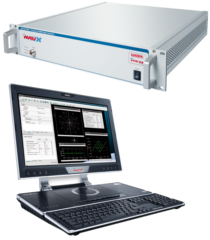
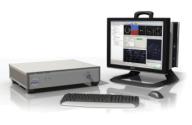
Anritsu Corporation, a Japanese manufacturer of test and measurement equipment, has selected IFEN’s NavX-NCS Standard GNSS simulator as its assisted-GPS (A-GPS) test system for use in developing mobile terminals.

The NavX-NCS is a GNSS RF navigation constellation simulator capable of simulataneously simulating signals from up to nine L-band frequencies in the GPS, Galileo, GLONASS (including its new G1 frequency), and QZSS systems.

Read More >

By Inside GNSS
[uam_ad id="183541"]
September 1, 2009

u-blox Launches Ultra-Low Power u-blox 6 for Battery-Driven Applications

Thalwil, Switzerland–based embedded GNSS receiver provider u-blox has announced the upgrade of its core CMOS technology to u-blox 6, with substantially reduced power requirements as the result of new "intelligent," user-selectable power management features. According to the company, these innovations enable significantly extended battery life for power-critical GPS applications.

Read More >

By Inside GNSS
[uam_ad id="183541"]
July 14, 2009

GPS Networking, Inc., moves to New Facility

GPS Networking, Inc., a provider of GPS/GNSS signal distribution equipment and accessories since 1999, is moving effective July 15.

The company is remaining in Pueblo, Colorado, and moving into a larger facility at 3915A Outlook Blvd, Pueblo CO 81008.

GPS Networking’s phone number (1-800-463-3063/1-719-595-9880), fax number (719-595-9890) and website address <www.gpsnetworking.com> will also remain the same.

Read More >

By Inside GNSS
July 10, 2009

Chronos Launches GPS Interference Monitor

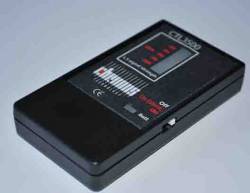
Chronos Technology, of Lydbrook, Gloucstershire, United Kingdom, has introduced its CTL3500 Interference Monitor, a low-cost, handheld, battery-operated device designed to detect the presence of too much GPS power or non-GPS signals and interference broadcasting on the L1 channel.

Read More >

By Inside GNSS

GPS Networking Offers Variable Gain Amplifier with Push Button Control

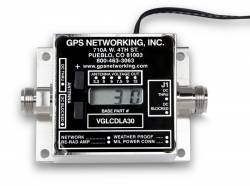
GPS Networking, of Pueblo, Colorado, has launched the VGLCDLA30RPDC, a variable gain GPS in-line amplifier with LCD display and push button control.

Featuring a range of 0–30 dB, the VGLCDLA30RPDC’s push button control can increase or decrease gain in increments of 1 dB, enabling operators to make precise adjustments quickly and view the output power at any given time for more efficient testing.

The unit operates on 110VAC or 220 VAC transformer (wall mount) and 240 VAC (United Kingdom). Connector options include types N, SMA, TNC, and BNC.

Read More >

By Inside GNSS
July 8, 2009

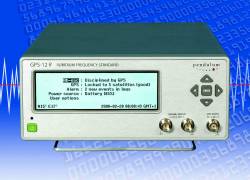
Pendulum’s Adds Options for GPS-12 Portable Frequency Standard Family

Pendulum Instruments, Stockholm, Sweden, has introduced four new options for the company’s GPS-12 Portable Frequency Standard family.

First released in 2006, the GPS-12R, a portable GPS controlled rubidium Frequency Standard with battery backup power, supplies a variety of standard frequencies for general metrology (1, 5, and 10 MHz), base station test (13 MHz) and telecom (E1/T1 clock/data).

Read More >

By Inside GNSS
1 62 63 64 65 66 73
IGM_e-news_subscribe