Zeljko Popovic is a research engineer at Honda R&D Americas, Inc. in Southfield, Michigan, investigating GPS positioning performance in obstructed environments for the needs of cooperative vehicle safety.
He has previously developed automotive control algorithms and software for Siemens VDO and Visteon.
Popovic earned a B.S. in mechanical engineering (mechatronics option) from the University of Waterloo and an M.S. in computer engineering from the University of Michigan-Dearborn.
By Inside GNSSMark Greaves is one of two geodetic analysts at Ordnance Survey.
He holds an M.Sc. in engineering surveying and geodesy and is a member of the Royal Institute of Chartered Surveyors.
Greaves specializes in geodetic GNSS computations and analysis. He has worked at Ordnance Survey for almost 25 years during which time he has been responsible for several national GNSS network adjustments, including two internationally ratified realizations of the ETRS89 coordinate reference system in Great Britain.
By Inside GNSSPaul Cruddace is the geodesy and positioning manager at Ordnance Survey, Great Britain’s national mapping agency.
He is responsible for the development and implementation of the overall strategy including the national GNSS infrastructure.
Cruddace is a chartered surveyor with a background in the use of precise GPS positioning to determine earthquake hazards.
By Inside GNSSWillard Marquis is a senior staff systems engineer with the GPS IIR and GPS III Flight Operations Group, Lockheed Martin Space Systems Company.
By Inside GNSSBudget storms have reappeared on the horizon and the fore¬cast for defense expenditures, including for the GPS program, is grim with a high probability of ugly.
By Dee Ann DivisWorking Papers explore the technical and scientific themes that underpin GNSS programs and applications. This regular column is coordinated by Prof. Dr.-Ing. Günter Hein, head of Europe’s Galileo Operations and Evolution.
By Inside GNSS

CORS and OPUS for Engineers
Edited by Tomás Soler
PUBLISHED BY THE AMERICAN SOCIETY OF CIVIL ENGINEERS
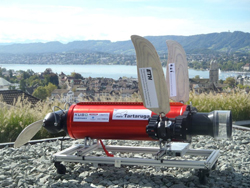
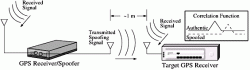
FIGURE 1: Simplified probe architectureGNSS vulnerability is rightly one of the most talked about topics of 2011.
By Inside GNSS

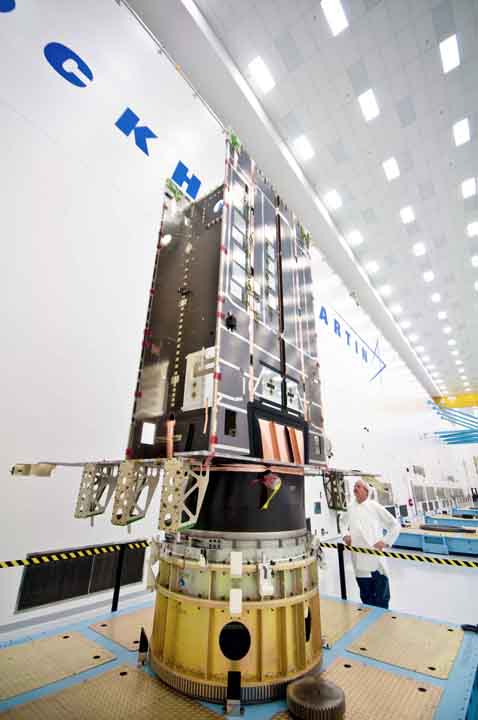
FIGURE 1: GPS III On OrbitIn May 2008, Lockheed Martin Space Systems Company received a contract from the U.S. Air Force to develop a new, third generation of GPS satellites. The GPS III space vehicle (SV) has been designed (Figure 1, see inset photo, above right) and is now being built to bring new future capabilities to both military and civil positioning, navigation, and timing (PNT) users throughout the globe.
By Inside GNSS

The 2011 Telematics@China conference and exhibition will be held at the Shanghai Marriott Hotel City Centre in Shanghai, China from Wednesday through Friday, December 7-9.
The annual event, which began in 2008, is sponsored by the Automotive Engineers of China (SAE-China) and supported by a number of government departments. The conference will feature 90 speakers from all sectors of the telematics industry. Organizers expect 1,000 attendees from China and the rest of the world.
By Inside GNSS[Updated September 2, 2011] Amid White House efforts to keep a lid on the process and congressional hearings on the subject, the controversy surrounding LightSquared’s interference to GPS could compel the Federal Communications Commission (FCC) to require another round of testing — this time of the wireless broadband company’s lower L-band frequencies.
By Inside GNSS