
Main Categories

July 20, 2011

EC Official Adds Galileo, EGNOS Worries to FCC’s LightSquared-GPS Deliberations

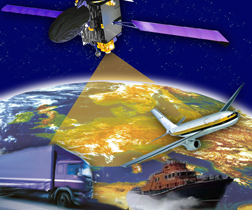
European Geostationary Navigation Overlay Service (EGNOS). ESA illustration

Citing European Space Agency (ESA) studies that showed “harmful interference” to Galileo receivers operating up to 1,000 kilometers from LightSquared base stations, a European Commission (EC) official has told the Federal Communications Commission (FCC) about his “deep concerns” about the wireless broadband company’s terrestrial transmissions in the 1525–1559 MHz band next to L1 GNSS frequencies.

Read More >

By Inside GNSS
July 16, 2011

Successful Launch for Second GPS Block IIF Satellite

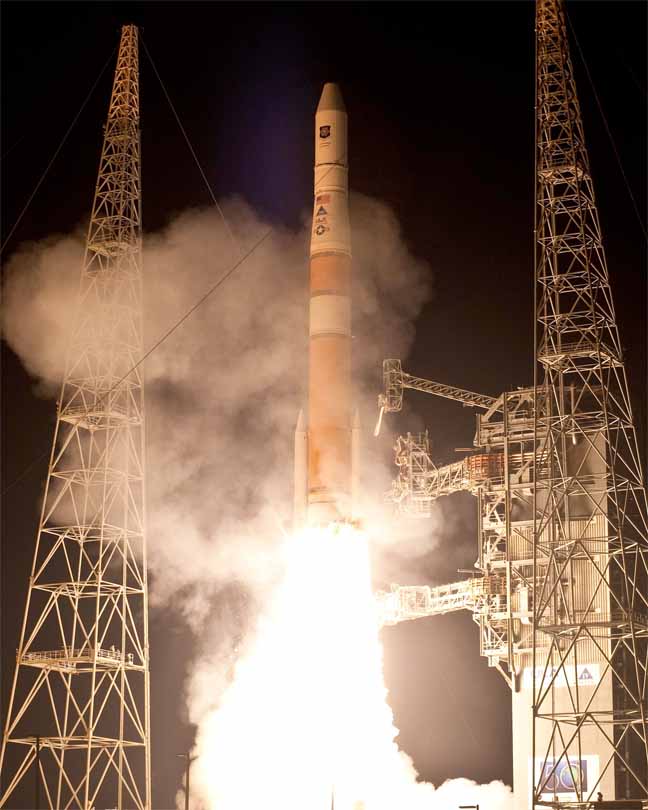
Launch of GPS IIF-2. United Launch Alliance photo by Pat Corkery

[updated July 16] Boeing has received the first on-orbit signals from the second of 12 GPS Block IIF satellites it is building for the U.S. Air Force. GPS IIF-2, renamed Space Vehicle Number 63 (SVN-63), is functioning normally and ready to begin on-orbit maneuvers and operational testing.

After two postponements, the second  GPS Block IIF satellite launched successfully from Cape Canaveral at 2:41 a.m. EDT on July 16. A video of the launch was posted on YouTube and can be viewed here.

Read More >

By Inside GNSS
[uam_ad id="183541"]

GNSS-Based Attitude Determination

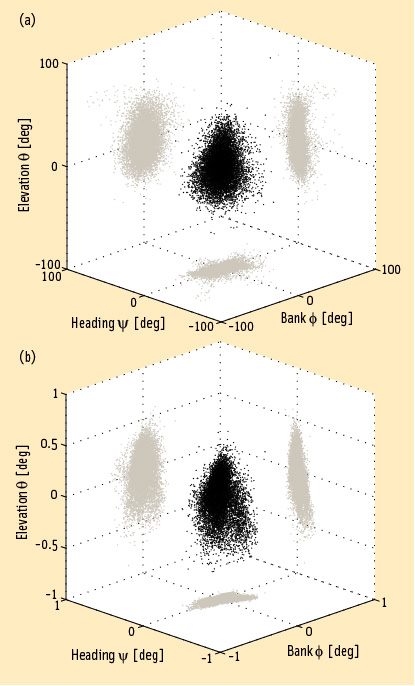
FIGURE 1: Heading, bank and elevation angles of an actual platform carrying two perpendicular two meter-long baselines. The attitude solutions are shown for both the derived, or float, measurements (top), as well as the carrier phase-based, or fixed, measurements obtained after having correctly resolved the integer ambiguities (bottom). Precision differs between the methods by two orders of magnitude. Gray dots represent the two-dimensional projections on each of the three coordinate planes.

Working Papers explore the technical and scientific themes that underpin GNSS programs and applications. This regular column is coordinated by Prof. Dr.-Ing. Günter Hein, head of Europe’s Galileo Operations and Evolution.

Read More >

By Inside GNSS

What is a virtual reference station and how does it work?

Q: What is a virtual reference station and how does it work?

A: To reach centimeter-level — or even better — accuracy of positioning typically requires use of precise dual-frequency carrier phase observations. Furthermore, these observations are usually processed using a differential GNSS (DGNSS) algorithm, such as real time kinematic (RTK) or post-processing (PP). Regardless of the specific differential algorithm, however, implicit in the process is an assumption that the quality of the reference station data is consistent with the desired level of positioning accuracy.

Read More >

By Inside GNSS

China Satellite Conference 2011

Hotel Nikko New Century in Haidian, Beijing

This officially sanctioned conference and equipment exhibtion addresses applications, technologies and trends for China’s satellite communications, broadcasting, remote sensing, navigation and positioning.It will be held at Hotel Nikko New Century in Beijing on October 26.28, 2011.

Subjects of most interest to Inside GNSS readers include:

Read More >

By Inside GNSS
[uam_ad id="183541"]

Berlin GNSS Symposium 2011

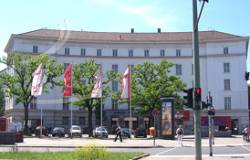
Rathaus Wilmersdorf

The International Symposium on Global Navigation Satellite Systems, Space-based and Ground-based Augmentation Systems and Aplications will take place at the Wilmersdorf in Berlin on October 10 and 11. The event will be held in English.

This year, the focus is on EUPOS, a ground-based European GNSS augmentation system, and on the regional geodetic reference frames and systems, ground-based GNSS infrastructures and technical developments in the field of DGNSS.

Read More >

By Inside GNSS
July 10, 2011

SIRGAS 2011

El Fortin monument in Heredia, Costa Rica

SIRGAS 2011,  the annual working meeting of the organization in charge of the geocentric reference system for the Americas, will be held in Heredia, Costa Rica from August 8 to 10.

It will take place in Clodomiro Picado Twight auditorium at the Omar Dengo campus of the National University of Costa Rica.

Read More >

By Inside GNSS

2011 East Coast Seminars: NavtechGPS

NavtechGPS will offer its 2011 east coast GNSS technical seminars at the Doubletree Hotel in Annapolis, Maryland from Monday, July 11 through Friday, July 15.

Over 25 years, NavtechGPS has organized basic and advanced GNSS seminars for engineers and technical professionals all over the United States and has provided GPS/GNSS applications solutions for military and research customers, with product choices from more than 30 manufacturers.

Read More >

By Inside GNSS
July 8, 2011

NTIA Asks FCC to Delay LightSquared Rollout

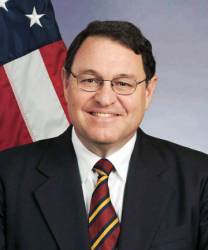
Lawrence E. Strickling, National Telecommunications and Information Administration (NTIA)

[Updated July 9, 2011] The National Telecommunications and Information Administration (NTIA) on July 6 asked the Federal Communications Commission (FCC) to hold off on allowing LightSquared to begin commercial operations, pending further evaluation of the cellular broadband system’s interference to GPS.

Read More >

By Inside GNSS
July 6, 2011

ESA International Summer School on Navigation Satellite Systems 2011

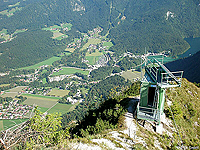
Galileo Test and Development Environment (iFEN photo)

The 2011 International Summer School on GNSS will take place July 20 to July 30 in Berchtesgaden, Germany at the GATE facility (Galileo Test and Development Environment).

This year’s theme is Towards a Mutli-Constellation Multi-Frequency GNSS and SBAS.

You may still  register online for the waiting list. (Link here for the summer school program. )

Read More >

By Inside GNSS
IGM_e-news_subscribe