

Galileo

November 4, 2009

Galileo Program Recalibrates Schedule, Budget, Open Signal ICD

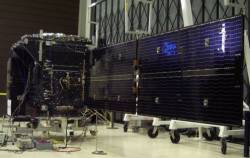
Galileo IOV ProtoFlight Model under Assembly

Galileo program managers appear to have bowed to the unavoidable and acknowledged that completing the European satellite navigation system will take longer and cost more than their revised estimates of 2014 and  €3.4-billion ($5.04-billion), respectively

And, although a revised Galileo Open Service Signal-in-Space Interface Control Document (OS-SIS-ICD) will appear soon allowing manufacture and sale of Galileo equipment without a license, the ICD will still require a license for commercial use of the intellectual property contained in the document.

Read More >

By Inside GNSS
October 27, 2009

CERGAL 2010, GNSS Certification Symposium, Issues Call for Papers

The 2010 CERGAL symposium will take place in the Baltic city of Rostock, in northern Germany, next April 28-29.

This year, the Symposium on Certification of GNSS Systems and Services will concentrate on maritime and inland waterways applications and GNSS testing infrastructure.

In addition to those topics, papers are invited on GNSS system aspects and aviation, road, rail and other special applications. Abstracts are due on November 30, 2009. 

Read More >

By Inside GNSS
[uam_ad id="183541"]
October 2, 2009

Europe Declares Start of EGNOS Satellite Navigation Service

Antonio Tajani, EC Vice-President for Transport Policy, announces EGNOS Open Service.

During a press conference today (October 1, 2009), Antonio Tajani, European Commission vice-president for transport policy, announced the official start of operations for EGNOS, the European Geostationary Navigation Overlay Service.   This is a major milestone for EGNOS, a satellite-based augmentation system that improves the accuracy of satellite navigation signals over Europe.

The EGNOS Open Service is now available free of charge for non-safety-of-live applications to all users equipped with suitable receivers – and most mass-market satellite navigation receivers being sold today are EGNOS-ready.

Read More >

By Inside GNSS
[uam_ad id="183541"]
September 11, 2009

EC to Declare EGNOS Operational for Non-Safety-of-Life Use

The European Commission (EC) expects to declare in October that the European Geostationary Navigation Overlay Service (EGNOS) — which provides satellite-based augmentation signals for GPS and Galileo — is operationally ready as an open and free service for non-safety-of-life (non-SoL) applications, according to a press release from the GNSS Supervisory Authority (GSA).

Read More >

By Inside GNSS
September 1, 2009

2009 European Workshop on GNSS Signals and Signal Processing Issues Call for Papers

Open House at the German Aerospace Center (DLR) near Munich, Germany.

GNSS Signals 2009 will take place at the German Aerospace Center (DLR) in Oberpfaffenhofen, Germany on Thursday and Friday, December 10-11 2009.

The free workshop will cover recent advances in GNSS signal design,
evolution of Galileo and other GNSSes and a number of GNSS signal processing and observation techniques. The presentations and papers will be in English. 

Program committee cochair Jean-Luc Issler of CNES, the French space agency, said the first call for papers has gone out and abstracts are due before October 2, 2009.

Read More >

By Inside GNSS
August 11, 2009

Spirent Launches New Signal Generator

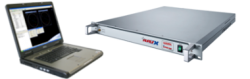
Spirent Communications plc has launched the GSS6300 Multi-GNSS Signal Generator, intended for high-volume production test applications for devices that use commercial GPS/SBAS, GLONASS, and/or Galileo receivers.

The GSSS6300 provides a comprehensive remote control interface, designed to facilitate integration into automated test equipment (ATE) environments.

Read More >

By Inside GNSS
July 17, 2009

U.S. Access to Europe’s Galileo Program Markets Subject of Trade Rep Report

Comments submitted to the Office of the U.S. Trade Representative (USTR) suggest that the Galileo program is finally nearing a decision on commercial use of specifications for its Open Service (OS), but U.S. officials remain concerned that this nation’s equipment manufacturers not be placed at a competitive disadvantage. Meanwhile, Galileo simulators appear to finally be reaching receiver manufacturers, despite the absence of official approval.

Read More >

By Inside GNSS
1 73 74 75 76 77 81
IGM_e-news_subscribe