Galileo

June 26, 2012

GISSA Ukubuzana 2012

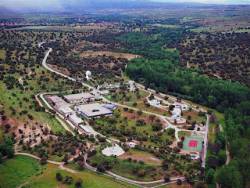
Central area, Emperors Palace convention center and resort

The Geo-Information Society of South Africa will hold its 2012 conference and exhibition, GISSA Ukubuzana*, on October 2, 3 and 4 at the Emperors Palace Convention Centre, Jones Road, Kempton Park in Gauteng. A free shuttle bus is available every 20 minutes from Johannesburg’s O.R. Tambo (ORTIA) airport to the convention center.

The theme is "An African Dialogue: Geomatics for Infrastructure Development and Service Delivery."The keynote speaker will be Dean Angelides, ESRI’s corporate director for international operations.

Read More >

By Inside GNSS
June 23, 2012

GNSS and Positioning for the Future Workshop

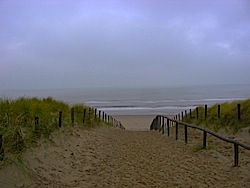
Northern Jutland Peninsula

A seven day workshop on GNSS and Positioning for the Future will be held at a Jutland (North Sea) resort in Denmark from August 27 through September 2, 2012. It is open all those with an interest in satellite positioning and navigation but limited to the first 50 registered participants.

The workshop will cover GNSS basics, new satellite navigation systems, arctic navigation, intelligent transportation systems and environmental monitoring, with lectures by international experts in those fields. The program and full list of lecturers are available on the event website.

Read More >

By Inside GNSS
[uam_ad id="183541"]
June 18, 2012

Spirent Launches New Entry-Level Multi-GNSS Simulator

Spirent Communications has announced the launch of its new eight-channel GSS6300M Multi-GNSS simulator designed for integration, verification, and production testing where a quick and accurate functional test is needed.
 
The platform supports simulation of signals from individual or combined GPS/SBAS, GLONASS, and Galileo constellations with up to 24 channels are supported with 8 channels of simulation per constellation.
 

Read More >

By Inside GNSS
June 8, 2012

New Navigator Seminar

Business School, University of Nottingham Jubilee Campus

The Royal Institute of Navigation will hold a new navigator seminar and networking opportunity at the University of Nottingham on June 14, 2012 for new navigators, engineers, scientists and surveyors who are seeking careers in the industry.

Masters and doctoral level students will present on navigation and positioning topics, advanced undergraduates and postdocs will be in attendance. A number of industry and government representatives will exhibit or attend to listen to new research and meet the new talent.

Read More >

By Inside GNSS
May 27, 2012

IP Rights and Wrongs

As Desi Arnaz often said to Lucille Ball during an “I Love Lucy” episode on TV, “You’ve got some ’splaining to do.”

I refer, of course, to the untoward and unexpected initiative by the British Ministry of Defense (MoD) to patent the technical innovations that underlie the planned next generation of civil GNSS signals.

Read More >

By Dee Ann Divis
[uam_ad id="183541"]
May 26, 2012

Stanford and Aalborg Announce Summer Workshop on GNSS Positioning for the Future

A number of GNSS experts from the United States, Denmark, Norway and China will lead a weeklong workshop on the future of satellite-based positioning technologies from August 27 through September 2 at the Slettestrand Holiday Center in North Jutland, Denmark.

The topics range from GNSS basics and Intelligent Transportation Systems to new GNSSes, new receivers and indoor navigation as well as environmental monitoring and arctic navigation. The event is organized by Stanford and Aalborg universities.

Read More >

By Inside GNSS

May 24, 2012

How do GNSS-derived heights differ from other height systems?

FIGURE 2: Example of a national geoid (upper diagram) and a correction surface for the transformation from the new orthometric height system to the old height system (lower diagram). Country is Switzerland. Geoid undulations range from 45 to 55 meters in ETRS89 and from -5 to +5 meters in the national System CH1903+. Lower diagram: Correction surface to transform from the new orthometric height system (LHN95) to the old height system LN02 with corrections from -0.10 to 0.55 meters.

Q: How do GNSS-derived heights differ from other height systems?

A: Height estimation using GNSS always seems to be trickier than horizontal coordinate estimation.

Why?

On the one hand, the GNSS technique has error sources that are more critical in the vertical direction. Height estimates are weaker because of a combination of satellite geometry, the presence of strong correlations to other parameters, such as atmospheric delays, and the antenna phase center model applied during data analysis.

Read More >

By Inside GNSS

May 23, 2012

Inertial Sensors and Systems 2012

An afternoon at the 2011 symposium

The Inertial Sensors and Systems symposium will take place at the Karlsruhe Institute of Technology in Karlsruhe, Germany on September 18 and 19, 2012. The conference will be held in English.

At this conference, formerly the Symposium Gyro Technology, the latest state of inertial sensors and navigation systems as well as gyro technology will be presented.

This includes applications of this technology, the development of new systems, components and test procedures as well as investigations on cost and marketing aspects.

Read More >

By Inside GNSS
COSPAR 2012: Committee on Space Research Scientific Assembly

Ceremonial room in the Mysore Palace, now a public museum.

The 39th scientific assembly of COSPAR, the Committee On Space Research, willl take place from July 14 to July 22, 2012 at the Global Education Centre-2, Infosys Training Centre, Mysore, Karnataka, India. Mysore is known as the "City of Palaces."

The topics are fundmentals and relevance of space science and technological innovations and applications. Of particular interest to readers of Inside GNSS are sessions on atomic clocks, space weather, space debris, satellite dynamic and the ionosphere.

Read More >

By Inside GNSS
1 61 62 63 64 65 81
IGM_e-news_subscribe