Global Navigation Satellite Systems Engineering, Policy, and Design
Global Navigation Satellite Systems Engineering, Policy, and Design
The U.S. Air Force GPS Directorate released a final request for proposal (RFP) for Global Positioning System (GPS) III Launch Services today (September…
By Inside GNSS

The average person with a smart phone has their location revealed every three minutes, according to a recent study, information that can be…
By Inside GNSS

[SIGNALS exclusive] With customers demanding greater security against hackers and jamming, GNSS receiver manufacturers are incorporating a widening array of techniques to thwart…
By Inside GNSS
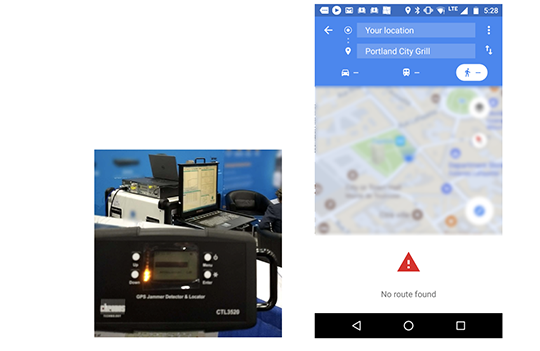
GNSS technology, which has been in the background of many intelligent transport system (ITS) projects and programs, will be front and center at…
By Inside GNSS

Operational responsibility for two recently launched Galileo satellites has been handed over to the Galileo Control Center (GCC) in Oberpfaffenhofen, Germany. Launched…
By Inside GNSS

ION GNSS+ 2016: GNSS + Other Sensors in Today’s Marketplace will take place at the Oregon Convention Center in Portland, Oregon from September…
By Inside GNSS

Forsyth Park, Savannah, Georgia The IEEE/ION PLANS 2016: Position Location And Navigation Symposium will take place April 11-14 2016 at the Hyatt Regency…
By Inside GNSS

Waikiki Beach UPDATED: March 21, 2017 The Institute of Navigation’s 2017 Pacific PNT Conference will take place May 1-4, 2017 at the Marriott…
By Inside GNSS

Monterey Bay, California. The Institute of Navigation’s 2016 International Technical Meeting (ITM) will take place January 25-28 at the Hyatt Regency Monterey in…
By Inside GNSS

Munich, Germany The Munich Satellite Navigation Summit and exhibition will take place at the Residenz Muenchen in Munich, Germany on March 1 –…
By Inside GNSS

Michael Sanjume, deputy chief of the GPS Directorate User Equipment Division The Air Force may dial back plans to accelerate its military receiver…
By Inside GNSS

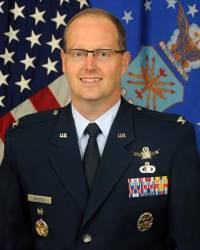
With experience in satellite procurement, user equipment development and working with Congress, Col. Steven Whitney may be just the chief the GPS Directorate…
By Inside GNSS
Unicore UR380 GNSS Receiver with UB380 Unicore released UB380 GPS/GLONASSS/BDS high precision board at ION GNSS+ 2015, held this week in Tampa, Florida….
By Inside GNSS

UNAVCO has announced the selection of Septentrio to be the preferred vendor of next-generation GNSS reference stations for the Geodesy Advancing Geosciences and…
By Inside GNSS

With a successful September 10/11 launch under its belt, the Galileo program continues to move in the right direction, but proponents should be…
By Inside GNSS