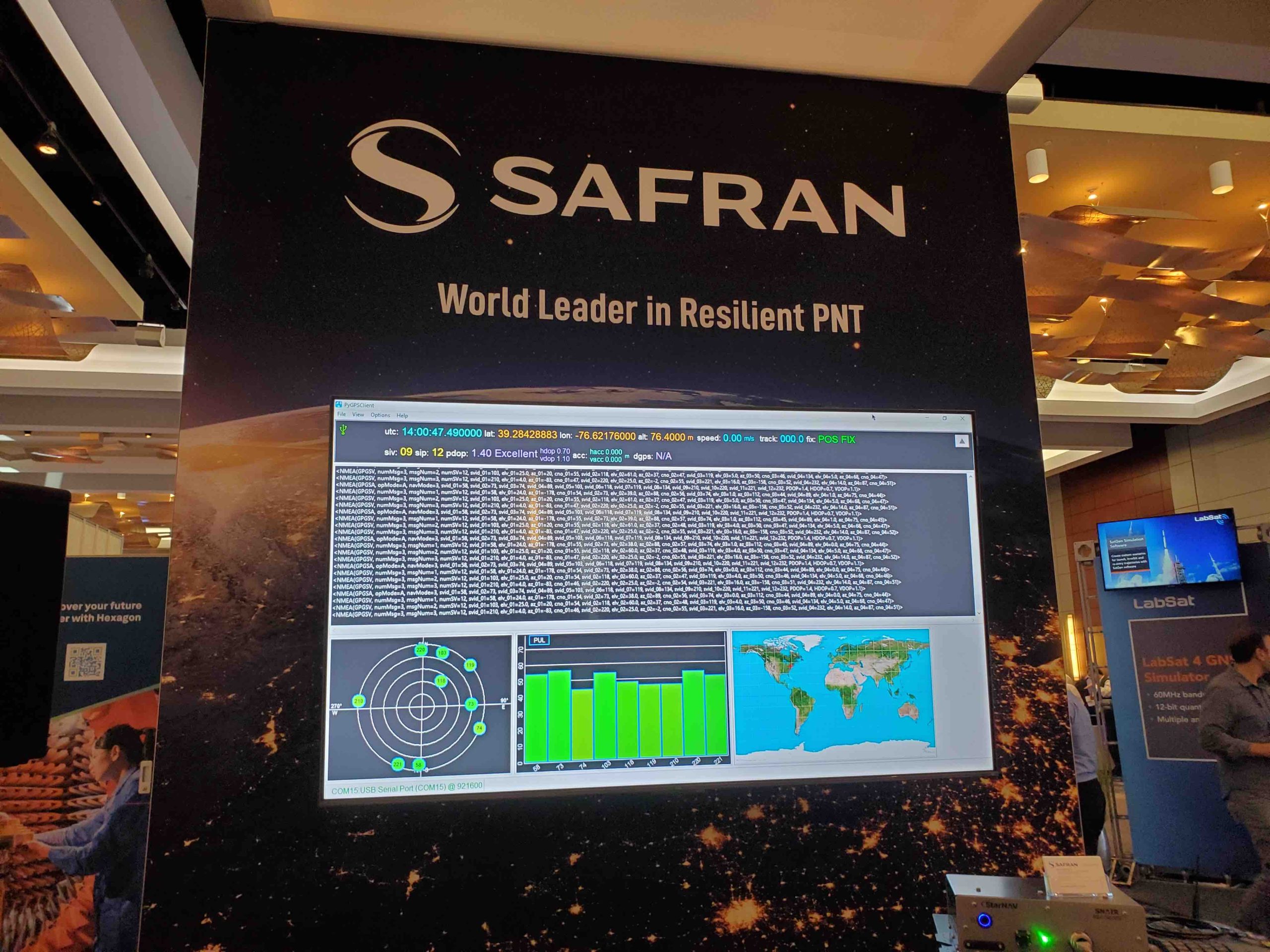
Safran Electronics & Defense has signed an agreement to acquire French navigation specialist Syntony GNSS, further consolidating its position in the resilient PNT market three years after bringing Orolia into the group.
Announced Feb. 13, the deal will see Safran take 100% of Syntony’s share capital, subject to customary regulatory approvals. Financial terms were not disclosed.
Toulouse-based Syntony, founded in 2015, has built a reputation around software-defined GNSS technology, offering high-fidelity simulators, multi-constellation receivers, underground GNSS coverage systems and anti-jam/CRPA solutions for civil and defense customers.
According to Safran, Syntony will be integrated into the Navigation & Timing business unit within Safran Electronics & Defense. The acquisition is aimed at expanding Safran’s portfolio of resilient PNT products—particularly for GNSS-denied environments and critical-infrastructure applications—and at supporting European efforts to secure sovereign access to Galileo and other GNSS services.
Filling in the PNT stack after Orolia
Safran’s move follows its 2022 acquisition of Orolia, the Rochester-based timing and PNT specialist known for atomic clocks, precision time servers, distress beacons and GNSS simulation products. With Orolia now operating under Safran’s electronics and defense segment, the group already offers a broad range of clocks, timing systems and GNSS simulators for aerospace, defense and space markets.
By adding Syntony, Safran is tightening its grip on several niche but strategically important segments:
- Underground and indoor GNSS coverage. Syntony’s SubWAVE technology extends GNSS signals into mines, tunnels, subway systems and other GPS-denied environments using existing leaky-feeder and cable infrastructure, enabling seamless above-/below-ground positioning with standard receivers.
- Software-defined GNSS simulators and receivers. The company’s SDR-based Constellator simulators and receiver cores support multi-constellation, multi-frequency testing, CRPA antenna evaluation and advanced interference/jamming scenarios—all handled in software with upgradeable signal and threat models.
- Secure, Galileo-centric PNT. Syntony has become a key European supplier of Galileo-compatible equipment, including receivers capable of accessing the Public Regulated Service (PRS) for government users, reinforcing the EU’s drive for navigation sovereignty.
Safran’s statement frames the acquisition as a way to “strengthen its offer in resilient PNT, combining inertial navigation, timing and GNSS technologies” for applications ranging from aviation and space to critical infrastructure and defense.
Strategic and technical implications
On the technical side, the combination of Safran inertial systems, Orolia timing products and Syntony’s SDR-based GNSS solutions sets up a tightly integrated PNT stack:
- High-performance atomic clocks and timing distribution from the Orolia portfolio.
- Tactical and strategic-grade inertial navigation from Safran’s gyro and accelerometer lines.
- Flexible GNSS signal generation, reception and underground coverage from Syntony’s SDR platforms.
That combination is designed to support resilient PNT architectures that can blend multi-GNSS, inertial, timing and alternative signals for contested environments where jamming, spoofing or space-weather effects degrade conventional GNSS.
Syntony’s receivers are already being designed into European programs, including ESA’s SWING space-weather nanosatellite, where its Aquila GNSS payload will monitor ionospheric conditions affecting navigation signals. Bringing that technology under Safran’s umbrella gives the larger group a stronger role in future Galileo and European space-safety initiatives.