In a world increasingly reliant on satellite-based positioning and timing, the vulnerabilities of GNSS are no longer just academic.
From jamming and spoofing to degraded signals in dense environments, these threats are real—and they require resilient, scalable and intelligent solutions.
That’s where etherwhere comes in. Marrying controlled reception pattern antenna (CRPA) chip-level innovations with a cloud-based infrastructure built for high-volume deployments, Etherwhere is solving mission-critical PNT challenges at scale. Whether it’s tracking cattle in the Amazon, monitoring global pallet networks, automating retail logistics, or building sovereign timing systems, the company is helping reshape how organizations think about GNSS reliability and flexibility.
EMBEDDED RESILIENCE THROUGH CRPA
At the heart of etherWhere’s approach is a CRPA architecture integrated directly at the board level—enhancing the ability to mitigate jamming and spoofing without requiring external modules or signal chains.
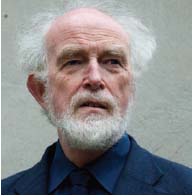
“The value of board-level CRPA is that it delivers resilience as a default—baked into the system design rather than layered on top,” said Michael Raam, CEO of etherWhere.
This decision is as strategic as it is technical. By aligning with Export Administration Regulations (EAR) rather than International Traffic in Arms Regulations (ITAR),
etherWhere’s solutions are accessible to both domestic and international partners. And with growing demand from civil, defense and commercial sectors for multi-layered PNT protection, board-level CRPA gives developers a head start in achieving compliance and reliability.

CLOUD-BACKED CUSTOMIZATION
etherWhere isn’t just a chip company—it’s a vertically integrated platform provider. The same chip that receives satellite signals also syncs with a cloud backend that handles configuration, optimization and application logic. The result: end-to-end systems that are customizable per use case, yet scalable by the millions.
One example: a large-scale cattle tracking solution in South America, designed to meet stringent European Union deforestation compliance regulations. The tags operate in harsh, signal-limited environments—under trees, across miles of terrain, and without guaranteed human interaction.
“We built cloud-managed modes of operation that adapt signal acquisition strategies based on terrain, movement and activity patterns,” Raam said. “The tag knows how to behave based on its context.”
Other clients use etherWhere’s solution to track pallets globally, register retail appliances automatically, or deliver redundant timing services combining GPS and Iridium. While the domains differ, the core system—chip, firmware and cloud—remains modular and tunable.
“We’re focused on use cases where the volume justifies customization. That means chip, tag and cloud all working together for the mission.”
VOLUME-FIRST STRATEGY
Unlike traditional solution providers who optimize for niche integrations or bespoke systems, etherWhere’s sweet spot lies in high-volume environments—specifically those with at least a million units per year or those that can justify disposable infrastructure.
In one application, a leading electronics company uses etherWhere’s tag to automate warranty and ownership registration for appliances. In another, their chips track automobiles from manufacturer to dealership, eliminating costly misplacements and improving delivery visibility.
The approach enables etherWhere to support custom solutions through non-recurring engineering (NRE) fees, while generating revenue through chip sales and cloud subscriptions.
“Customization slows time to market—but at scale, it becomes a competitive advantage.”
BROAD MARKET RELEVANCE
While the cattle tracking use case may serve as an accessible entry point, it’s far from unique. etherWhere’s chips are also being tested in tracking radioactive medical materials, where chain-of-custody and compliance are paramount. In another vertical, their precise timing solutions are enabling more resilient communications infrastructure by combining GPS with alternate constellations for redundancy.
Raam also teased the company’s next-generation solution: a “tag in a chip” architecture that integrates low-power multi-band GNSS, software-defined radio and cloud-native orchestration—all in a single package. This evolution represents etherWhere’s push toward miniaturization and autonomy without sacrificing reliability or flexibility.
BUILDING A TIME-SOVEREIGN FUTURE
As discussions about sovereign timing grow louder in the halls of government and telecom operators, etherWhere’s blend of low-jitter timing, multi-signal redundancy, and cloud-backed configuration is gaining traction.
“Resilient time is just as important as resilient position,” Raam said. “And we’re helping customers build that foundation without needing GPS to be infallible.”
This message aligns with global PNT policy discussions—particularly in Five Eyes and NATO nations—about the need for more robust alternatives to GNSS, especially in contested or denied environments.
WHAT COMES NEXT
With a planned controlled reception pattern antenna (CRPA) strategy at the board level and cloud-enabled customization across millions of devices, etherWhere is redefining what GNSS resiliency means for real-world autonomy and asset tracking—from agriculture and infrastructure to logistics and timing.
With the Joint Navigation Conference (JNC) approaching, etherWhere plans to expand its message to a broader cross-section of stakeholders—from defense program leads and commercial integrators to satellite infrastructure providers and timing authorities.
As Raam puts it: “Whether you’re tracking a cow, a crate or a critical signal, you need systems that deliver certainty—not just accuracy. That’s what we’re building.”