The ESA-funded MAPP (Maritime Autonomous Positioning Platform) project, led by Space Applications Services with ANavS as subcontractor, has successfully demonstrated a robust, high-accuracy, multi-sensor, positioning and attitude determination system tailored for maritime autonomous surface ships (MASS).
Without reliable, high-accuracy positioning and attitude determination, autonomous ships risk making navigation errors that can result in inefficient maneuvers, and even collisions or groundings. Addressing this challenge, MAPP project partners developed a new platform that enhances navigation safety and reliability in port environments, marking a major step toward fully autonomous maritime operations.
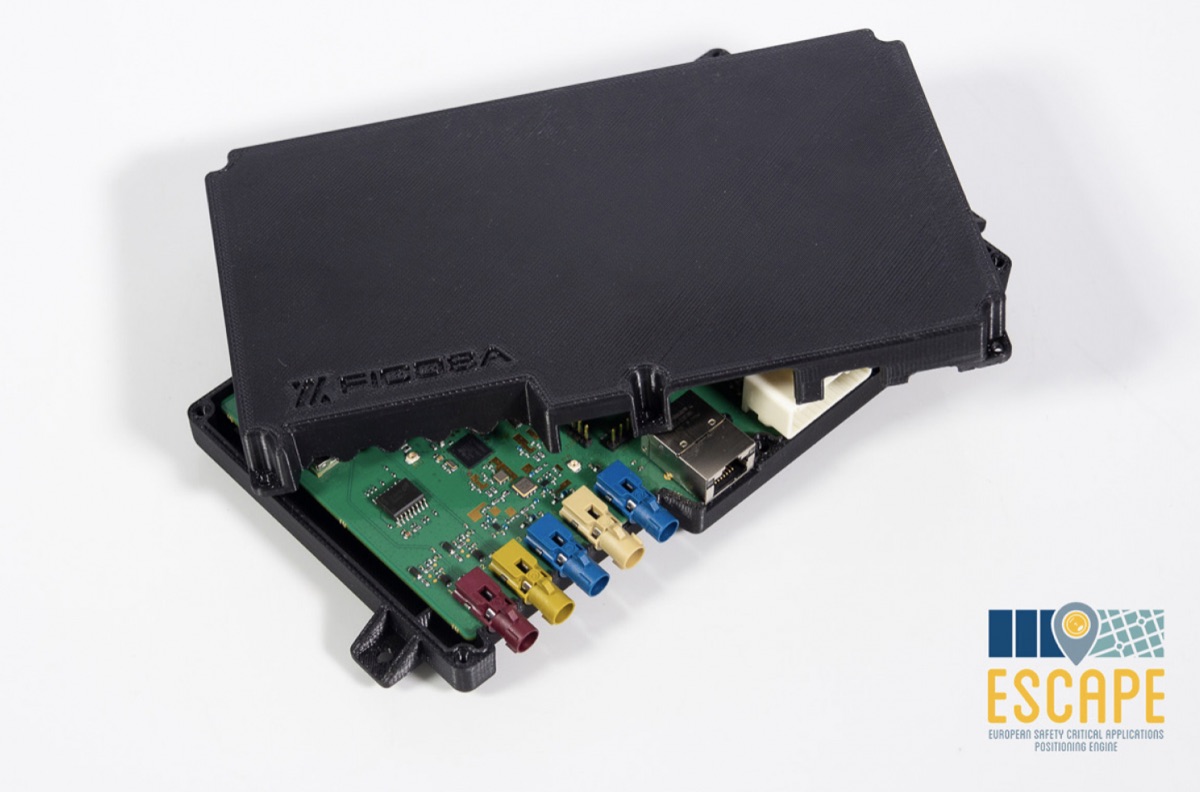
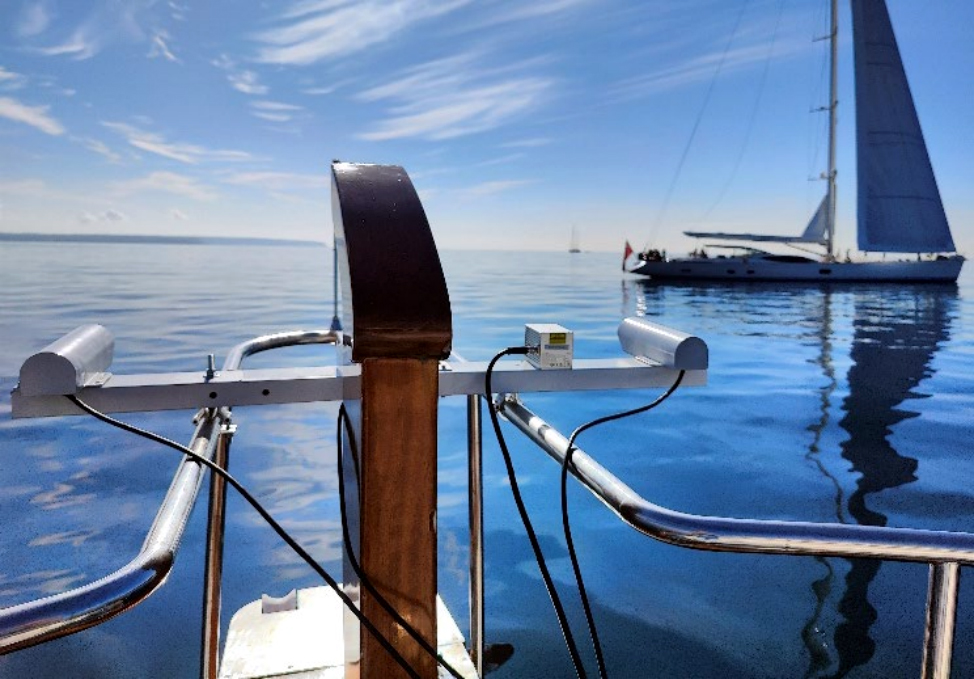
MAPP integrates a sophisticated sensor suite comprising GNSS, IMUs, stereo cameras, and a solid-state LiDAR, all managed through a modular hardware and software architecture. The system combines GNSS-PPP and RTK correction solutions with visual and LiDAR-based localization, fusing data through extended Kalman and particle filters to ensure consistent positioning and attitude determination.
This multi-layered approach, featuring a model-based hybrid state space (MHSS) integrity monitoring scheme, enables real-time fault detection and exclusion, ensuring reliable navigation data even in complex and GNSS-challenged port conditions.
Exemplary R&D
At a recent ESA-funded event, Shashank Govindaraj and Jitao Zheng of Space Applications Services, together with Jorge Moran Garcia, Jan Fischer, and Sai Parimi of ANavS, presented the final results of the MAPP project.
Field trials conducted in Trieste and Palma de Mallorca validated the platform’s performance in three key use cases: port approach, port navigation, and docking. Results showed sub-meter positioning accuracy and heading errors below one degree, meeting stringent key performance indicators for maritime operations.
The system maintained 100% availability in port approach and in-port navigation scenarios, with protection levels consistently overbounding position errors. While the docking phase’s 25 cm horizontal alert limit was not fully achieved, the team identified that relative positioning techniques could enhance future performance.
A highlight of MAPP is its robustness against sensor failures. The central fusion filter maintained stability during GNSS outages and sensor dropouts, with minimal drift thanks to integrated inertial and visual data. Fault detection mechanisms successfully identified and mitigated a wide range of simulated errors without degrading accuracy.
Moving forward, Govindaraj said, MAPP partners will work to increase system maturity through testing on larger vessels and preliminary integration into ship navigation systems, paving the way for safer and smarter autonomous maritime navigation. This activity was fully funded under NAVISP Element 1, which aims to boost European innovation in Positioning, Navigation and Timing (PNT).