Main Categories

January 25, 2013

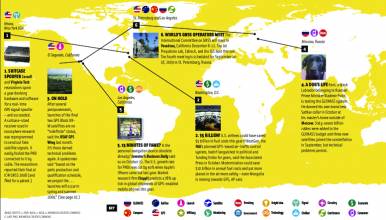
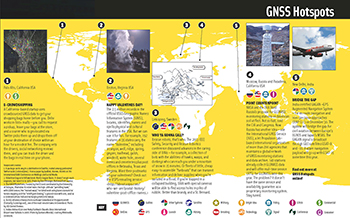
GNSS Hotspots | January 2013

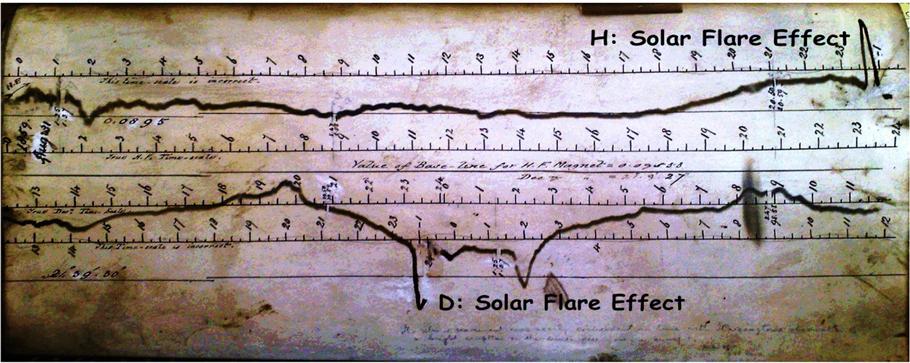
One of 12 magnetograms recorded at Greenwich Observatory during the Great Geomagnetic Storm of 1859
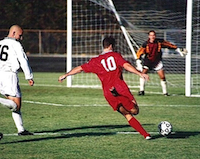
1996 soccer game in the Midwest, (Rick Dikeman image)
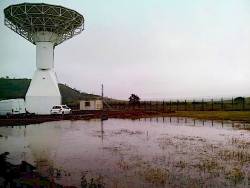
Nouméa ground station after the flood
A pencil and a coffee cup show the size of NASA’s teeny tiny PhoneSat
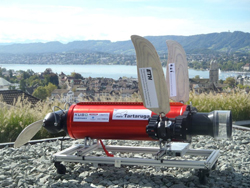
Bonus Hotspot: Naro Tartaruga AUV
Pacific lamprey spawning (photo by Jeremy Monroe, Fresh Waters Illustrated)
“Return of the Bucentaurn to the Molo on Ascension Day”, by (Giovanni Antonio Canal) Canaletto
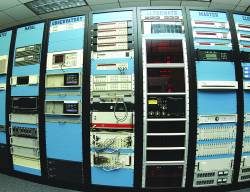
The U.S. Naval Observatory Alternate Master Clock at 2nd Space Operations Squadron, Schriever AFB in Colorado. This photo was taken in January, 2006 during the addition of a leap second. The USNO master clocks control GPS timing. They are accurate to within one second every 20 million years (Satellites are so picky! Humans, on the other hand, just want to know if we’re too late for lunch) USAF photo by A1C Jason Ridder.
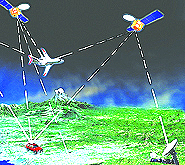
Detail of Compass/ BeiDou2 system diagram

Hotspot 6: Beluga A300 600ST

1. TIMING IS EVERYTHING
Washington, D.C.

Read More >

By Inside GNSS

GNSS and Ubiquity

Chris Rizos, University of New South Wales

GNSS is in a class of its own and the positioning/navigation/timing (PNT) technology of choice for most applications. Why wouldn’t we always use it?

It is affordable, it is a mature technology with many form factors, and its level of performance spans several orders of magnitude — millimeters to meters. There are a bewildering number of permutations of user equipment, augmentation solutions, processing algorithms, and operational procedures to choose from.

However. . . .

Read More >

By Inside GNSS
[uam_ad id="183541"]

Markets and Multi-Frequency GNSS

FIGURE 1: Proposal to have a single chip GNSS receiver with additional pins to allow for the inclusion of an additional radio

Q: What will limit the spread of multi-frequency GNSS receivers into the mass market?

A: To set the scene, we need to define our terms of reference. By multi-frequency we mean receivers that operate with navigation signals in more than just the standard upper L-band from about 1560–1610 MHz where we find GPS L1, Galileo E1, Compass B1, and GLONASS L1. The obvious additional frequency is the lower L-band, from about 1170 to 1300 MHz, where again the same four constellations have signals.

Read More >

By Inside GNSS

The GNSS Merry Go Round

The whole GNSS world should have a warm spot in its heart for centripetal forces.

After all, a centripetal force — in this case, gravity — is what keeps planets in rotation around our Sun and satellites, around the Earth.

Centrifugal force, of course, is what throws us off a merry-go-round or carousel. Centripetal force is what keeps us on board.

For those on a merry-go-round, the centripetal force is not gravity, but rather the tensile strength of our arms pulling us toward the center of rotation, at right angles to the motion of our seats.

Read More >

By Inside GNSS

Developing a GNSS Position and Timing Authentication Testbed

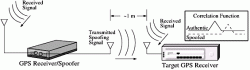
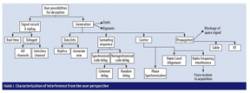
FIGURE 1: Characterization of interference from the user perspective

Increasing demand for ensuring the authenticity of satellite signals and position/velocity/time (PVT) calculations raises the need for tools capable of assessing and testing innovative solutions for verifying GNSS signals and PVT. Today’s civilian systems do not provide authentication at the system level, and a number of mitigation strategies have been developed in the last 10 years at user segment in order to protect receivers from interference and deception.

Read More >

By Inside GNSS
[uam_ad id="183541"]
January 22, 2013

AFRL Selects Surrey Satellite US to Evaluate Small Satellite Approach to GPS

The Air Force Research Laboratory (AFRL) has selected Surrey Satellite Technology US LLC (SST-US), of Englewood, Colorado, to investigate cost reduction and augmentation of the current GPS constellation through the application of a small satellite approach.

AFRL has contracted with SST-US to identify and analyze how small satellites can improve aspects of GPS system performance, such as accuracy, coverage, and robustness at costs far below those of past procurements.

Read More >

By Inside GNSS

EGU General Assembly 2013: European Geosciences Union

The 2013 European Geosciences Union General Assembly and exhibition will take place in the Austria Center Vienna (ACV) from April 7 through April 12.

The event attracts more than 11,000 geoscientists from all over the world. The official language is English. The early registration deadline is March 13. The program will be available after March 25.

Read More >

By Inside GNSS

2013 Geospatial World Forum

The 2013 Geospatial World Forum and industry exhibition will be held at the Beurs – World Trade Center in the international port city of Rotterdam on May 13-16.

This year’s theme is "Monetizing Geospatial Value and Practices." The keynote speakers are Chris Gibson, vice president of Trimble and Mark Reichardt, president and CEO of the Open Geospatial Consortium (OGC).

Read More >

By Inside GNSS

United Nations/ Croatia Workshop on GNSS Applications

This five-day workshop is one of several sponsored by the Office for Outer Space Affairs of the United Nations in various European countries.  The workshops will give participants an overview of GNSS systems and applications with the aim of strengthening a network of national reference stations and promoting the interoperability of navigation, positioning and timing systems in the region.

The UN/Croatia workshop will take place on Baška, Krk Island on April 21-25, 2013.
It is free.

Read More >

By Inside GNSS
January 20, 2013

ESAVS2013: Enhanced Solutions for Aircraft and Vehicle Surveillance Applications

The third symposium on Enhanced Solutions for Aircraft and Vehicle Surveillance Applications will take place at the MARITIM proArte Hotel in Berlin, germany on March 20 and 21, 2013. The event will be held in English. It  is organized by the German Institute of Navigation (DGON).

This emerging field of next-generation surveillance is driven by increasing air traffic volume, business demands for increased capacity and efficiency and citizen and government concerns about emissions and other environmental pressures.

Read More >

By Inside GNSS
IGM_e-news_subscribe