
Global Navigation Satellite Systems Engineering, Policy, and Design
Global Navigation Satellite Systems Engineering, Policy, and Design

What have we learned from the LightSquared fiasco?
Aside from the fact that someone gambling with other people’s money, with friends in high places benefiting from his largesse, can make the law stand on its head and our hair stand on end.
But then, we already knew that.
Just because the forces behind the broadband cellular company, Philip Falcone and Harbinger Investments, made their money by betting against the housing bubble doesn’t take away from the fact that they represent the same crew who helped take down the world economy in 2007.
By Inside GNSS
 European Geostationary Navigation Overlay Service (EGNOS). ESA illustration
Citing European Space Agency (ESA) studies that showed “harmful interference” to Galileo receivers operating up to 1,000 kilometers from LightSquared base stations, a European Commission (EC) official has told the Federal Communications Commission (FCC) about his “deep concerns” about the wireless broadband company’s terrestrial transmissions in the 1525–1559 MHz band next to L1 GNSS frequencies.
By Inside GNSS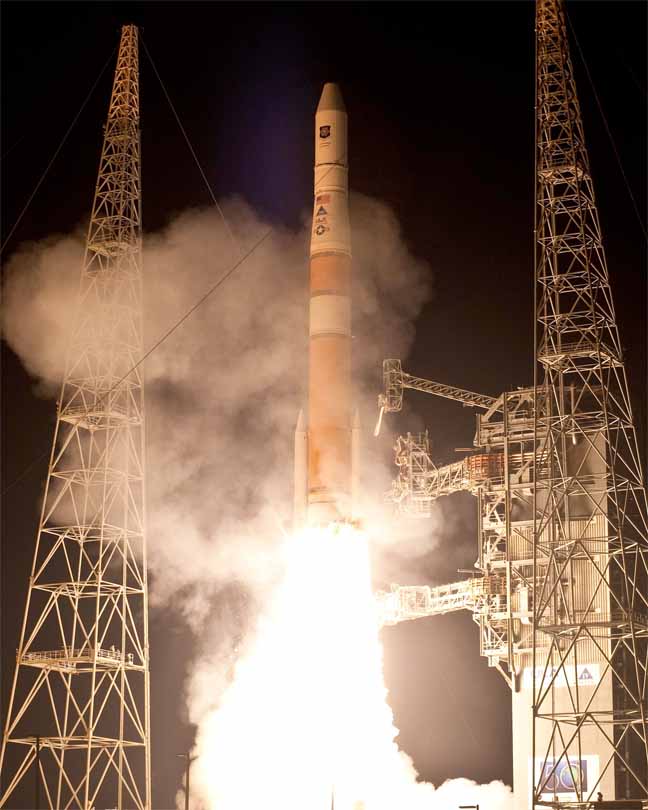 Launch of GPS IIF-2. United Launch Alliance photo by Pat Corkery
[updated July 16] Boeing has received the first on-orbit signals from the second of 12 GPS Block IIF satellites it is building for the U.S. Air Force. GPS IIF-2, renamed Space Vehicle Number 63 (SVN-63), is functioning normally and ready to begin on-orbit maneuvers and operational testing.
After two postponements, the second GPS Block IIF satellite launched successfully from Cape Canaveral at 2:41 a.m. EDT on July 16. A video of the launch was posted on YouTube and can be viewed here.
By Inside GNSS
The gloves have come off now that test results show clearly the probable effects on GPS of LightSquared’s proposed wireless broadband network: widespread, debilitating interference to GPS receivers.
By Dee Ann Divis El Fortin monument in Heredia, Costa Rica
SIRGAS 2011, the annual working meeting of the organization in charge of the geocentric reference system for the Americas, will be held in Heredia, Costa Rica from August 8 to 10.
It will take place in Clodomiro Picado Twight auditorium at the Omar Dengo campus of the National University of Costa Rica.
By Inside GNSS
NavtechGPS will offer its 2011 east coast GNSS technical seminars at the Doubletree Hotel in Annapolis, Maryland from Monday, July 11 through Friday, July 15.
Over 25 years, NavtechGPS has organized basic and advanced GNSS seminars for engineers and technical professionals all over the United States and has provided GPS/GNSS applications solutions for military and research customers, with product choices from more than 30 manufacturers.
By Inside GNSS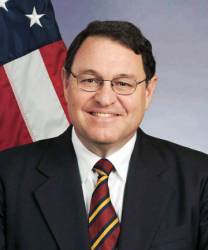 Lawrence E. Strickling, National Telecommunications and Information Administration (NTIA)
 [Updated July 9, 2011] The National Telecommunications and Information Administration (NTIA) on July 6 asked the Federal Communications Commission (FCC) to hold off on allowing LightSquared to begin commercial operations, pending further evaluation of the cellular broadband system’s interference to GPS.
By Inside GNSS Mita Kaigisho, site of the ICG-6 meeting
ICG-6, the sixth meeting of the UN’s Sixth Meeting of the International Committee on GNSS, will take place in Tokyo from September 5-9.
By Inside GNSS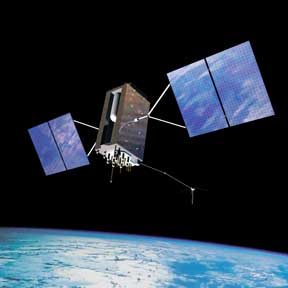 GPS III satellite. Lockheed Martin illustration
Lockheed Martin has announced the successful, on-schedule completion of a system design review (SDR) for the second-phase of next-generation GPS satellite development, the IIIB increment.
The company’s Space Systems division in Newtown, Pennsylvania, is under contract to produce the first two of a planned eight GPS IIIA satellites, with first launch projected for 2014. The contract includes a Capability Insertion Program (CIP) designed to mature technologies and perform rigorous systems engineering for future GPS III increments.
By Inside GNSS
Individuals and organizations wishing to comment on the recently released technical working group (TWG) report on LightSquared’s interference to GPS as well as the company’s proposal for dealing with the problem have until July 30 to submit statements to the Federal Communications Commission (FCC).
In a release dated June 30, the agency noted that the TWG effort “identified significant technical issues” related to potential LightSquared interference in the upper portion of the L-Band, next to the band used by GPS.
By Inside GNSS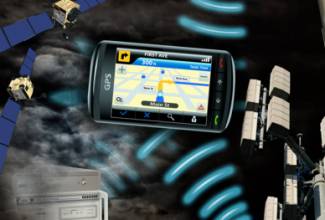
LightSquared submitted a 318-page report to the Federal Communications Commission (FCC) yesterday (June 30, 2011) on the months-long effort of a technical working group (TWG) to investigate the effects of the would-be cellular broadband company’s terrestrial transmitters on GPS receivers operating in an adjacent RF band.
By Inside GNSS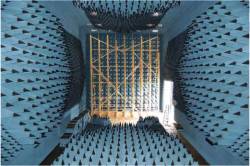 Anechoic chamber test site at U.S. Naval Air Systems Command (NAVAIR) facility in Patuxent River, Maryland
Interference can pose a threat to the reception of GNSS signals in a variety of ways. Even low-level signals have the potential to interfere with GNSS receivers, which require very high sensitivity for acceptable performance due to the extremely low received GPS signal power at the Earth’s surface.
By Inside GNSS