
GPS

State Officials Argue at AUVSI for Ban on Warrantless UAV Surveillance

Alaska Lieutenant Governor Mead Treadwell

Three key associations of state officials are recommending that states pass legislation banning the use of unmanned aerial vehicles (UAVs) for surveillance unless the person being tracked has given permission or a warrant has been issued.

The associations also recommended banning UAVs from carrying weapons and emphasizing in state laws that both UAVs and their smaller cousins, model aircraft, be operated in ways that do not “present a nuisance to people or property.”

Read More >

By Inside GNSS
August 10, 2013

LightSquared Investors Sue GPS Industry

[Updated August 15, 2013] Investors led by Harbinger Capital Partners have filed a $1.9 billion lawsuit against a trio of GPS receiver manufacturers  over LightSquared, a now bankrupt firm that still hopes to build a wireless broadband network across the United States.

Read More >

By Inside GNSS

[uam_ad id="183541"]
July 31, 2013

Exit Interview: GPS Directorate’s Col. Bernie Gruber

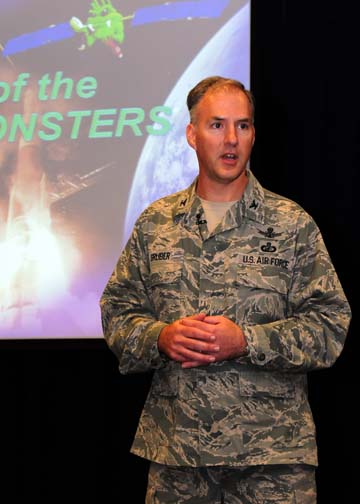
USAF Col. Bernie Gruber, GPS Directorate. Air Force photo

Last month, USAF Col. Bernard Gruber stepped down after three years of running the Global Positioning Systems Directorate at Los Angeles Air Force Base.

The GPS Directorate, originally established in 1974 as the NAVSTAR GPS Joint Program Office, is responsible for development, acquisition, fielding and sustainment of all GPS space segments: the modernized operational control segment (OCX), the next-generation GPS III satellites, and modernized GPS user equipment (MGUE).

Read More >

By Inside GNSS
FAA Approves Two UAS Type Certificates

The Federal Aviation Administration (FAA) has issued restricted category type certificates to a pair of unmanned aircraft systems (UAS), a milestone that will lead to the first approved commercial UAS operations later this summer.

Issuing the type certificates is an important step toward the FAA’s goal of integrating UAS into the nation’s airspace.  FAA officials announced the action last Friday (July 26, 2013).

Read More >

By Inside GNSS
July 27, 2013

Boeing Names New Director of GPS Programs

Dudley Barnfield, director, Boeing GPS Programs

Dudley Barnfield has joined the Boeing Government Space Systems (GSS) leadership team as director of the GPS programs.  He will have oversight for the entire GPS portfolio, which includes the GPS IIF program and alternate architecture initiatives.

Read More >

By Inside GNSS

[uam_ad id="183541"]
July 25, 2013

Safety Board Says Connected Vehicle Technology Should Be Required to Prevent Collisions

In a Tuesday (July 23, 2013) hearing on two fatal school bus/truck collisions, the National Transportation Safety Board (NTSB) recommended adoption of “connected vehicle technology” on all newly manufactured highway vehicles as a way to reduce such accidents.

Such collision-avoidance systems — similar to those used in civil aviation — would typically depend on real-time transmissions of the GNSS-derived locations of nearby vehicles to provide enhanced “situational awareness” to drivers.

Read More >

By Inside GNSS

July 22, 2013

GPS III Prototype Arrives at Cape Canaveral

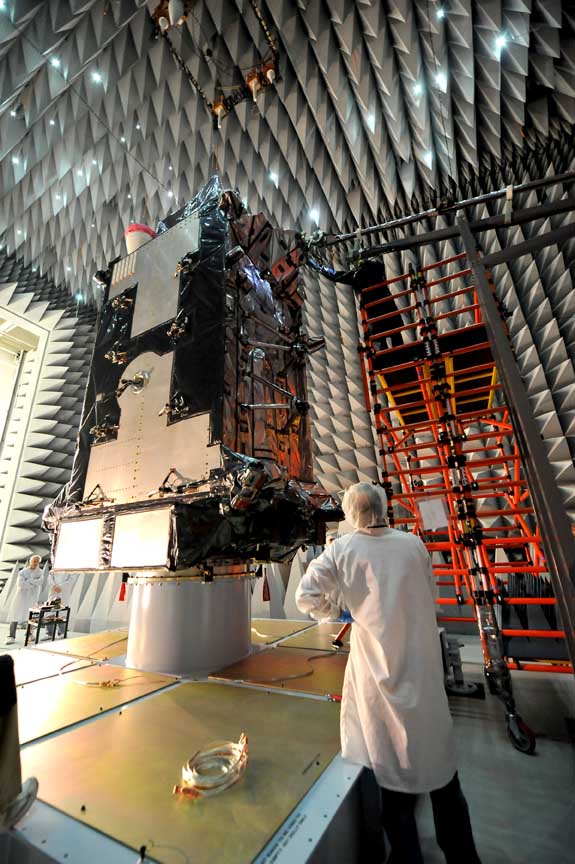
The GPS III Non-Flight Satellite Testbed (GNST) completed pathfinding activities at Lockheed Martin’s GPS III Processing Facility outside of Denver prior to it shipping to Cape Canaveral Air Force Station. Lockheed Martin photo

Lockheed Martin has delivered a full-sized, functional prototype of the next generation GPS satellite to Cape Canaveral Air Force Station.

The GPS III Non-Flight Satellite Testbed (GNST) arrived at the Cape on July 19 where it will be used to test facilities and pre-launch processes in advance of the arrival of the first GPS III flight satellites, which will undergo similar testing. The first flight GPS III satellite is expected to arrive at Cape Canaveral in 2014, ready for launch by the U.S. Air Force in 2015.

Read More >

By Inside GNSS
July 18, 2013

Spoofing

Logan Scott, LS Consulting

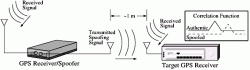
Sometimes GNSS spoofing seems a bit like UFOs: much speculation, occasional alarms at suspected instances, but little real-world evidence of its existence.

As far back as 2001, a U.S. Department of Transportation Volpe Center report suggested that as GPS further penetrates into the civil infrastructure, “it becomes a tempting target that could be exploited by individuals, groups or countries”.

Read More >

By Inside GNSS

Location, Location, Location

In a part of the world where frustrated drivers will park anywhere, including squarely on a sidewalk, a local newspaper is using location data to shame car owners into shaping up.

The Village, a Russian online publication serving Moscow, St. Petersburg and Kiev; created a free app that notes a badly parked vehicle’s make, color, and license plate information when users snap its picture.

Read More >

By Dee Ann Divis
July 17, 2013

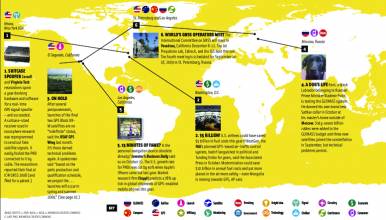
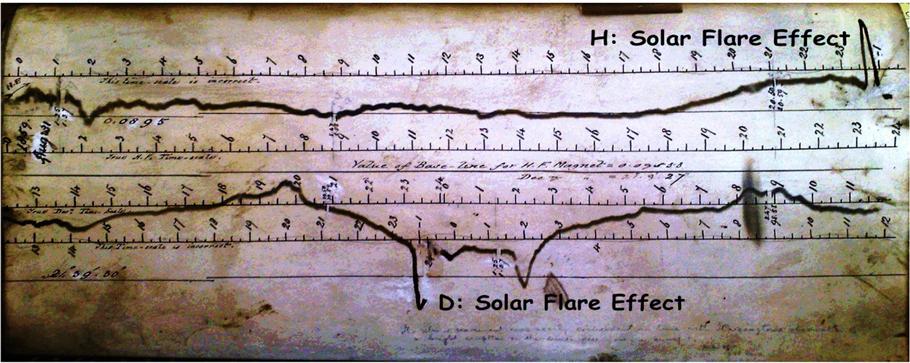
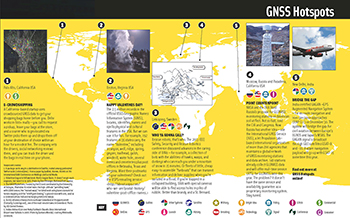
GNSS Hotspots | July 2013

One of 12 magnetograms recorded at Greenwich Observatory during the Great Geomagnetic Storm of 1859
1996 soccer game in the Midwest, (Rick Dikeman image)
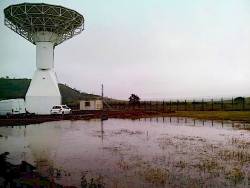
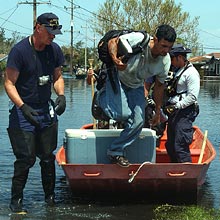
Nouméa ground station after the flood
A pencil and a coffee cup show the size of NASA’s teeny tiny PhoneSat
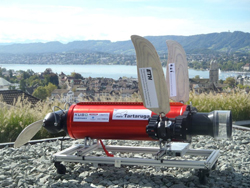
Bonus Hotspot: Naro Tartaruga AUV
Pacific lamprey spawning (photo by Jeremy Monroe, Fresh Waters Illustrated)
“Return of the Bucentaurn to the Molo on Ascension Day”, by (Giovanni Antonio Canal) Canaletto
The U.S. Naval Observatory Alternate Master Clock at 2nd Space Operations Squadron, Schriever AFB in Colorado. This photo was taken in January, 2006 during the addition of a leap second. The USNO master clocks control GPS timing. They are accurate to within one second every 20 million years (Satellites are so picky! Humans, on the other hand, just want to know if we’re too late for lunch) USAF photo by A1C Jason Ridder.
Detail of Compass/ BeiDou2 system diagram
Hotspot 6: Beluga A300 600ST

1. ASHES & AIRPLANES
Boulder, Colorado USA

Read More >

By Inside GNSS

Phones, Drones and Privacy

Every breath you take . . .
Every move you make
Every step you take
I’ll be watching you

I originally planned on titling this column, “Waiting to Inhale,” recalling these lyrics and an editorial I wrote more than four years ago about my sense of relief at the departure of the second Bush administration.

I called that one, “Waiting to Exhale.”

Read More >

By Inside GNSS
IGM_e-news_subscribe