January 25, 2013
Figures 16 & 17: Developing a GNSS Position and Timing Authentication Testbed
Return to main article: “Developing a GNSS Position and Timing Authentication Testbed”
By Inside GNSS
Global Navigation Satellite Systems Engineering, Policy, and Design
Return to main article: “Developing a GNSS Position and Timing Authentication Testbed”
By Inside GNSS
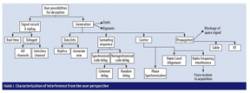 FIGURE 1: Characterization of interference from the user perspective
Increasing demand for ensuring the authenticity of satellite signals and position/velocity/time (PVT) calculations raises the need for tools capable of assessing and testing innovative solutions for verifying GNSS signals and PVT. Today’s civilian systems do not provide authentication at the system level, and a number of mitigation strategies have been developed in the last 10 years at user segment in order to protect receivers from interference and deception.
By Inside GNSS Francine Vannicola, Naval Research Laboratory
As the forthcoming “Time and Navigation” opening next March at the Smithsonian National Air and Space Museum reminds us, modern navigation depends profoundly upon time — the more precise, accurate, and stable a navigation system’s timing is, the more precise, accurate, and stable its positioning capability.
By Inside GNSS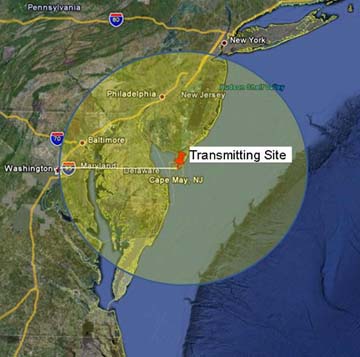 UrsaNav LF transmitter site for timing synchronization trials
Virginia-based engineering firm UrsaNav Inc. has begun transmitting a variety of low frequency (LF) test signals, including enhanced Loran (eLORAN), as part of a cooperative research and development agreement (CRADA) with the U.S. Coast Guard (USCG).
The test program include a comprehensive palette of signals that are being evaluated for their ability to provide a robust, wide-area, wireless precise timing alternative that can operate cooperatively with GNSS technology or autonomously during GNSS unavailability.
By Inside GNSS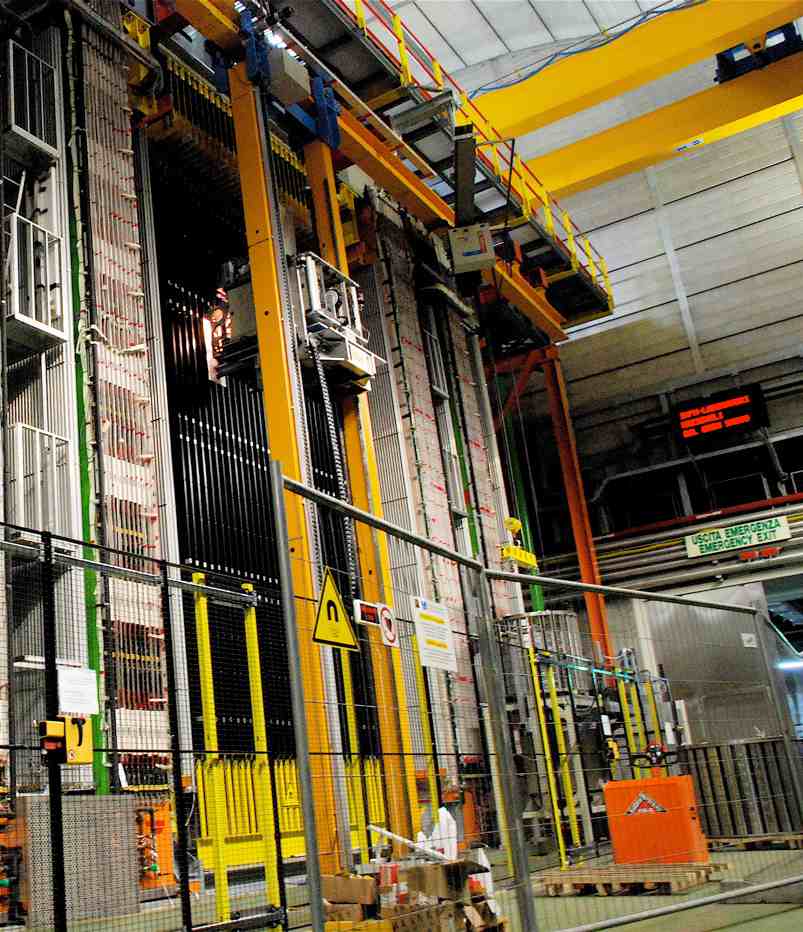 OPERA neutrino detector in Gran Sasso, Italy. INFN photo
No sooner had GPS positioning helped validate key aspects of Einstein’s general theory of relativity in the Gravity Probe-B program than GPS timing has been cited as helping bring his special theory of relativity into doubt.
At issue is the so-called OPERA (Oscillation Project with Emulsion-tRacking Apparatus) experiment, inaugurated in 2006 with the main goal of studying the rare transformation (oscillation) of muon neutrinos into tau neutrinos.
By Inside GNSS