Third GPS III Satellite Arrives at Cape Canaveral
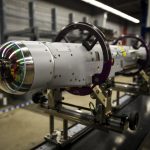
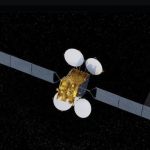
The third next-generation GPS III satellite arrived in Florida on February 5, destined for an expected April launch.
By Inside GNSSThe third next-generation GPS III satellite arrived in Florida on February 5, destined for an expected April launch.
By Inside GNSSEuropean Space Agency (ESA) top brass welcomed journalists to the Agency’s headquarters in Paris for its annual New Year’s press launch. On hand was the Director General as well as ESA’s Galileo guru Paul Verhoef, who spoke one-on-one with Inside GNSS.
By Peter GutierrezThe chairman of the Federal Communications Commission (FCC) told two U.S. Senators in January that his agency could not complete a decision on Ligado Network’s license modification by the end of 2019 because of a late-in-the-year response from a key federal agency.
By Dee Ann Divis2017 and 2018 saw unprecedented GNSS interference activity, from the eastern Mediterranean to Norway and Finland. Syria emerged as a testbed for electronic warfare capabilities. In April 2018, General Raymond Thomas, commander, U.S. Special Operations Command, referred to the region as “the most aggressive electronic warfare environment on the planet.”
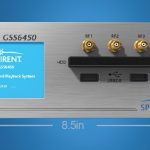
By Inside GNSSEcho Ridge LLC of Sterling, Virginia has been working with the Air Force Research Laboratory Center for Rapid Innovation to develop a way to determine position from non-GPS satellite signals in different frequency bands.
By Inside GNSSMicrochip Technology Inc. has released a smaller-footprint, higher-performance atomic clock to meet core telecomm, military and critical infrastructure requirements for wider thermal range, quicker lock and higher stability.
By Inside GNSSBAE Systems has entered a definitive Asset Purchase Agreement to acquire Collins Aerospace’s Military GPS business for $1.925 billion, and Raytheon’s Airborne Tactical Radios division for $275 million.
By Inside GNSSThe U.S. Air Force Second Space Operations Squadron (2 SOPS) has turned the first GPS III satellite, SVN-74, healthy and active.
By Inside GNSSInternational astronomers linked observations from eight telescopes, including the the Canadian Hydrogen Intensity Mapping Experiment (CHIME), to pinpoint the location of a repeating fast radio burst (FRB), a little-understood and seldom-observed astronomical phenomenon that may hold keys to the origin of the universe. GPS played an important role in coordinating the telescopes and their milliseconds of data.
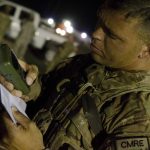
By Inside GNSSForward-deployed U.S. military personnel will soon benefit from warfighter localization sensor units that provide tracking information in GPS-denied environments in a bootstrap mode. The Army Product Manager Sets, Kits Outfits and Tools awarded a $16.5 million contract to Robotic Research of Clarksburg, Maryland for WarLoc units to equip four deployed U.S. Army Brigade Combat Teams in various locations. The first batch of systems has already been shipped, and should enable soldiers on foot to keep track of each other in terrain where GPS systems are less effective.
WarLoc provides localization and positioning data for teams of warfighters or first responders in signal-denied environments such as underground facilities and inside buildings and mega-cities, according to the company. The small sensor mounts on footwear. Multiple systems work together to further enhance accuracy and maintain the localization of teams.
[Heel-mounted warfighter localization sensor units, also known as WarLoc. Photo: Robotic Research.]
The tracking system augments its GPS receiver with an inertial measurement unit. The device connects with a smartphone through Bluetooth. Robotic Research fields two form factors of the WaLoc, one mounted over the top of the boot and another that wraps around the heel. Users view data readouts through an Android-based Tactical Assault Kit. The algorithms are reportedly robust to communications failures and dropouts, and the distributed nature works well in challenging communication environments.
By Inside GNSS
Reducing the number of GPS receivers installed or carried while tapping multiple PNT sources.
Prototyping and beta testing are techniques closely associated with Silicon Valley, the innovation engine admired around the world and, in particular, inside the Pentagon. Simply introducing a new idea has been known to take years in these halls; witness the long introductory saga of GPS itself in the 1970s.
By Dee Ann DivisThe previously-troubled program to build a new GPS ground control system has stayed on track for the last two and a half years and is moving along as planned, said Lt. Gen. John ‘JT’ Thompson, commander of the Air Force Space and Missile Systems Center (SMC).
By Dee Ann Divis