A: System Categories

Russia’s First GLONASS-K In Orbit, CDMA Signals Coming

The first new-generation satellite GLONASS-K of the GLONASS navigation system has reached its targeted orbit, the Russian Federal Space Agency (Roscosmos) announced today (February 26, 2011).

The Soyuz-2.1b rocket lifted off from Plesetsk cosmodrome at 6:07 a.m. (Moscow time) this morning. The GLONASS-K spacecraft was carried into its planned orbit by a Fregat booster at 9:41 a.m. Moscow time, according to Roscosmos public affairs office, which reported that the satellite separated from the booster as planned.

Read More >

By Inside GNSS
February 25, 2011

ESA Conducts Europe-Wide Galileo Satellite Launch Dress Rehearsal

The first two of four Galileo In-Orbit Validation satellites are due for launch in August 2011. ESA illustration

Europe’s GNSS system is still six months away from first launch of its in-orbit validation (IOV) spacecraft, but one Galileo satellite has already been put through its paces, taking center stage in a Europe-wide exercise conducted recently by the European Space Agency (ESA).

The satellite in question never left the confines of its Thales Alenia Space (TAS) integration facility in Rome, Italy, but was connected to a distant trio of control centers during the nine-day System Compatibility Test Campaign (SCTC-1), which began on January 25.

Read More >

By Inside GNSS
[uam_ad id="183541"]

Russia Introduces New GLONASS Constellation Status Website

Home Page of New IAC Website

The Russian Federal Space Agency (Roscosmos) has launched a new version of its Information-Analytical Center (IAC) website, probably the best-known and most-used source for real-time information on the GLONASS constellation.

Currently operating in test mode, the site may be accessed at <http://new.glonass-iac.ru/en/index.php>. Among the new features of the IAC website are an interactive access to the GLONASS ftp-archive (the “Archive” section) and a new section with reference information (the “Guide”).

Read More >

By Inside GNSS

Russia Delays GLONASS-K Launch

Launch of the first GLONASS-K satellite, scheduled to take place this morning (6:15 a.m., Moscow time, February 24), has been  postponed for 24 hours, according to the Russian state news agency, RIA Novosti.

A spokesman for the Russian Space Defense Forces attributed the delay to "technical reasons." A news report by the PRIME-TASS news agency, citing a space industry source, said the failure involved a piece of the launch vehicle’s control system equipment.

Read More >

By Inside GNSS
February 17, 2011

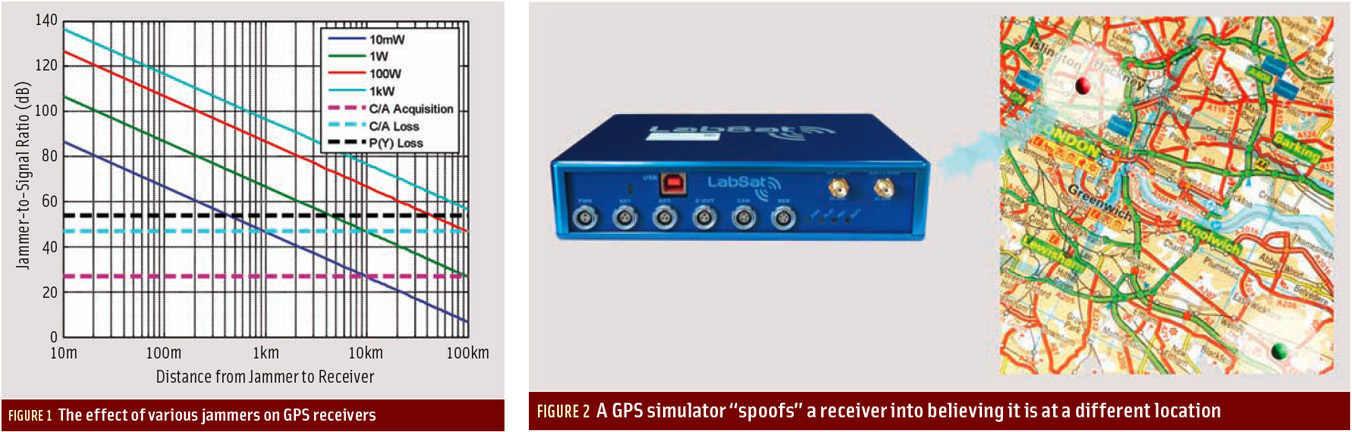
FCC Campaign Goes After GPS and Cell Phone Jammers

Website at http://www.jammer-store.com/gps-blockers-jammers.html

The  Enforcement Bureau of the U.S. Federal Communications Commission has announced new efforts to clamp down on the marketing, sale, and use of illegal cell phone and GPS jamming devices.

On February 9, the Bureau released two enforcement advisories and a downloadable poster on cell phone and GPS jamming that warn consumers, manufacturers, and retailers (including online and Web-only companies) that the marketing, sale, or use of such jamming devices is illegal.

Read More >

By Inside GNSS
[uam_ad id="183541"]
February 16, 2011

Hemisphere GPS: China OEM Alliance, New GPS Compass Products

H102 GPS Compass

Hemisphere GPS has announced an OEM alliance with a Chinese manufacturer of agricultural, construction, and power machinery equipment as well as the release of two compact GPS compass products.

The Calgary, Alberta, Canada–based company’s alliance with YTO Group Corporation, headquartered in Luoyang City, China, is part of Hemisphere GPS’s to expand its operations in the international realm.

Read More >

By Inside GNSS
January 30, 2011

Spectracom Launches GSG-55 GPS/SBAS Constellation Simulator

Pendulum GSG-55 Simulator

Spectracom has announced its new 16-channel GPS constellation simulator, the Pendulum GSG-55.

The latest in the Pendulum line of GPS receiver test instruments, the GSG-55 is able to simulate Satellite-Based Augmentation Systems (SBAS), such as the U.S. Wide Area Augmentation System and the European Geostationary Navigation Overlay Service (EGNOS).

Read More >

By Inside GNSS

JAXA Selects Spirent Simulator for QZSS Receiver Testing

Spirent Communications’ Positioning Technology Division, Paignton, UK, has announced that the Japanese Aerospace Exploration Agency (JAXA) has selected Spirent’s GSS8000 Multi-GNSS Constellation Simulator to support further development of the Quazi-Zenith Satellite System (QZSS) program.

Responsible for the development of the initial QZSS user equipment, JAXA is using the GSS8000 to verify QZSS receiver performance.

Read More >

By Inside GNSS

GPS/ GNSS Community Feels New Telecom Interference Threat from LightSquared

In his State of the Union address on January 25, President Obama held up the Global Positioning System as a prime example of government providing “cutting-edge scientists and inventors with the support that they need” to create world-leading, job-creating innovation.

The following day, the Federal Communications Commission (FCC) International Bureau approved a conditional waiver allowing LightSquared Subsidiary LLC to build tens of thousands of terrestrial transmitters for wireless communications in frequencies on either side of the GPS L1 band.

Read More >

By Inside GNSS
January 25, 2011

Lockheed Martin to Test GPS III in Virtual World

Collaborative Human Immersive Laboratory (CHIL) illustration (Lockheed Martin)

GPS III contractor Lockheed Martin has integrated several virtual reality technologies in a new Collaborative Human Immersive Laboratory (CHIL) in Littleton, Colorado, which will be used to validate and test next-generation GPS and other space programs.

With CHIL, Engineers and technicians can explore satellite designs and functions, troubleshoot and fine-tune them in a virtual world before building them in physical space.

Read More >

By Inside GNSS
IGM_e-news_subscribe