Obama 2010 GPS Budget Calls for $1 Billion+
The president’s proposed Fiscal Year 2010 (FY10) budget would provide more than $1 billion for GPS and related U.S. space-based positioning, navigation, and timing (PNT) programs.
By Inside GNSS
Global Navigation Satellite Systems Engineering, Policy, and Design
The president’s proposed Fiscal Year 2010 (FY10) budget would provide more than $1 billion for GPS and related U.S. space-based positioning, navigation, and timing (PNT) programs.
By Inside GNSS
Trimble and the China Aerospace Science & Industry Academy of Information Technology (CASIC-IT) have announced plans to form a 50/50 joint venture in China to develop manufacture, and distribute Compass GNSS receivers and systems in China.

As if a puzzling signal anomaly on the latest GPS Block IIR-M satellite and continued struggles in the long-delayed Block IIF schedule hadn’t created enough pressure, a recent U.S. Government Accountability Office (GAO) report sketches dire prospects for the GPS program.
By Inside GNSS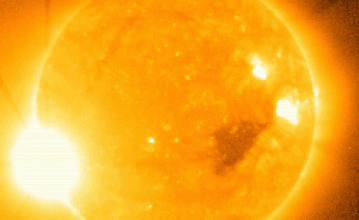
The solar wind plays havoc with GNSS ground and space segments – destroying electrical transformers and the electronic systems on satellites.
In fact, space weather is the single largest contributor to single-frequency GPS errors and also to differential GPS.2. And right now, we have only three years until the next Solar Max.
By Inside GNSS Galileo Master’s award winners 2008
Submit the best idea for a brand new satellite navigation application or device and you just might win the 2009 Galileo Master’s Award – €20,000 in prize money and lots of support to make your idea a reality.
But that’s not your only chance – you can try for one of the eight special topic prizes or one of the 17 different regional prizes, together worth €500,000 in cash and start-up assistance.
The competition began six years ago in Bavaria, Germany, but it has expanded to include many other regions of Europe as well as Australia, Israel, and Taiwan.
By Inside GNSS Brad Anderson
Rosum Corporation, the Mountain View, California–based supplier of timing and positioning technology that combines GPS and broadcast television signals, has named Brad Anderson as the company’s new chief executive officer.
By Inside GNSS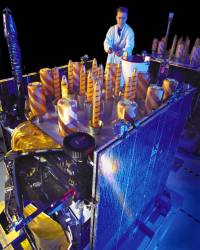 Block IIR-M satellite. Lockheed Martin photo.
Signal anomalies characterized by the U.S. Air Force as “out of family” transmissions will keep the latest GPS satellite from being declared healthy for months, if ever.
The report on space vehicle number (SVN) 49 by the GPS Wing’s chief engineer, Lt. Col. David Goldstein to the European Navigation Conference in Naples, Italy, on May 4 mixed bad news with glad.
Also known as Block IIR-20(M), the spacecraft carries the demonstration payload for the new civil GPS L5 signal. The March 24 launch probably represented the last chance to meet an International Telecommunications Union (ITU) deadline for securing primary rights to use of the RF band by GPS.
By Inside GNSSGalileo Services and OREGIN — the two most active organizations representing companies in the GNSS industry, particularly Europe’s Galileo program — have decided to join forces.
By Inside GNSS
Officials from Air Force Space Command’s Space and Missile Systems Center’s GPS Wing have announced the release of a request for proposal (RFP) for Phase B of the Next Generation GPS Control Segment (OCX) contracts.
By Inside GNSS
In his April 27 speech to the National Academy of Sciences (NAS) annual meeting, President Barack Obama twice singled out the Global Positioning System as an example of the need for renewing the U.S. commitment to basic scientific research and education.
“The calculations of today’s GPS satellites are based on the equations that Einstein put to paper more than a century ago,” Obama said, having noted that “no one can predict what new applications will be born of basic research. . . .”
By Inside GNSS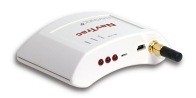
Ekahau Inc. has announced that its Wi-Fi location tracking software is being integrated into GPS receivers designed by NavSync Ltd. to enable customers to continuously track asset in indoor and outdoor environments.
Wi-Fi–enabled GPS tag combines NavSync’s NavTrac GPS module with Ekahau’s location protocol. The NavTrac module incorporates the CW85 16-channel GPS receiver/802.11b/g transmitter combination.
By Inside GNSS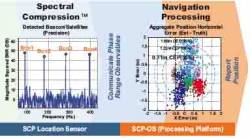 Loctronix SCP technology
[Updated 4/26/09] On March 31, the U.S. Patent Office granted Loctronix Corporation its first patent, which will provide the foundation for its Spectral Compression Positioning (SCP) technology that enables multi-source positioning capability in a single sensor. Subsequently, the company announced that it had successfully achieved meter-level ranging performance using CDMA cellular signals.
By Inside GNSS
A proposal now before the European Parliament and Council of the European Union would complete the transformation of the European GNSS Supervisory Authority (GSA) from the leading executive agency for the Galileo program into a diminished subsidiary of the European Commission (EC).
By Inside GNSS