
Hyten Nominated for Joint Chiefs of Staff
Gen. John E. Hyten, who led Air Force Space Command before becoming commander of U.S. Strategic Command, has been nominated to be the vice chairman of the Joint Chiefs of Staff.
By Dee Ann DivisGen. John E. Hyten, who led Air Force Space Command before becoming commander of U.S. Strategic Command, has been nominated to be the vice chairman of the Joint Chiefs of Staff.
By Dee Ann DivisMore powerful, accurate, resilient GPS III satellite will help modernize today’s GPS constellation
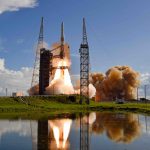
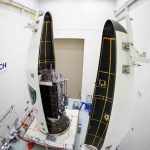
TITUSVILLE, Florida, July 8, 2019 – The GPS satellite constellation is about to get its next heathy dose of new technology and more advanced capabilities. The second next-generation, Lockheed Martin-built GPS III satellite—nicknamed “Magellan” by the U.S. Air Force—is sealed up and ready for its planned July 25 launch.
By Inside GNSSSpectrum regulators should hold off on granting a waiver supporting testing of a new UltraWideband (UWB) technology for driverless vehicles until more information is available, the GPS Innovation Alliance (GPSIA) said in comments to the Federal Communications Commission (FCC). In fact the FCC should require a minimum level of information be submitted before considering any UWB waivers or changes to the UWB rules, the GPSIA said.
By Dee Ann DivisThe GPS Directorate will update the public on revisions to public GPS documents at the 2019 Public Interface Control Working Group and Open Forum September 25 in El Segundo, California. The event is an opportunity for the public to submit issues and comments for analysis and possible integration into future GPS document revisions.
By Inside GNSSAt an event in the U.S. Capitol last week Senators Ted Cruz (R-TX) and Ed Markey (D-MA) discussed the importance of GPS to America and the need for a backup system when signals are not available.
By Inside GNSSION’s Joint Navigation Conference (JNC 2019) will be held July 8-10, at the Hyatt Regency Long Beach, Long Beach, California; and the U.S. ONLY CLASSIFIED sessions will be held July 11 at The Aerospace Corporation.
By Inside GNSSA judge has discontinued a $2 billion lawsuit alleging “massive fraud” in a deal that helped launch a proposed project GPS experts oppose as a threat to satellite navigation receivers.
By Dee Ann DivisUPDATE: A week after this story appeared the news broke that Fred Kennedy had quit as the head of the Air Force’s new Space Development Agency after just four months on the job. News reports suggested that issues with his boss, Undersecretary of Defense for Research and Engineering Mike Griffin, were at the heart of the resignation. — Dee Ann Divis
The director of the Department of Defense’s new Space Development Agency (SDA) said Friday that one of his priority projects is to create an alternate GPS capability using frequencies different from those of the current constellation.
By Dee Ann DivisTest drive illuminates need to protect GNSS with proactive cybersecurity strategies
Tesla Model S and Model 3, electric cars built for speed and safety, are vulnerable to cyberattacks aimed at their navigation systems, according to recent research from Regulus Cyber. During a test drive using Tesla’s Navigate on Autopilot feature, a staged attack caused the car to suddenly slow down and unexpectedly veer off the main road.
By Inside GNSSThe GPS Innovation Alliance (GPSIA) issued the following statement on reintroduction of the Moving FIRST Act by Senators Catherine Cortez Masto (D-NV), Richard Burr (R-NC), Cory Gardner (R-CO) and Kyrsten Sinema (D-AZ), as well as Representative Mark DeSaulnier (D-CA). By establishing the Strengthening Mobility and Revolutionizing Transportation (SMART) Challenge Grant Program, this legislation will encourage the use of technology, including the Global Positioning System (GPS), to advance innovation across communities nationwide.
By Inside GNSSNew Board Designation Expected This Fall
The leading U.S. panel of satellite navigation experts, the National Space-Based Positioning, Navigation, and Timing Advisory Board (“PNT Advisory Board”) opened its June meeting with a renewed charter, a new chairman and seven new members.
By Dee Ann Divis[Editor’s Note: This article was written and submitted by Mark Crews and John Betz.]
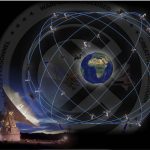
With the launch of the first next-generation GPS III satellite, GPS III Space Vehicle 01 (GPS III SV01), on December 23, 2018, the Global Positioning System (GPS) took a major step in modernizing technology and capability. The U.S. Air Force has continually improved GPS since the launch of the first GPS Block I satellite in 1978, and this ongoing modernization has provided new signals, greater accuracy, and increased robustness for civil and military users. After the first 10 GPS III satellites are launched over the next few years, up to 22 GPS III Follow-on (GPS IIIF) satellites will provide yet another step increase in GPS capabilities.
By Inside GNSSI read with great enthusiasm Dee Ann Divis’ article New Chimera Signal Enhancement Could Spoof-Proof GPS Receivers. Logan Scott is one of the brightest people I know, and I very much enjoyed his presentation about Chimera last week at the National PNT Advisory Board’s public meeting in Alexandria, Virginia.
By Dana A. Goward