
Global Navigation Satellite Systems Engineering, Policy, and Design
Global Navigation Satellite Systems Engineering, Policy, and Design
 Music right around the corner
This will be the 26th international technical meeting of the Satellite Division of the Institute of Navigation. It is the world’s largest and oldest GNSS conference, founded in 1987 as the ION GPS conference.

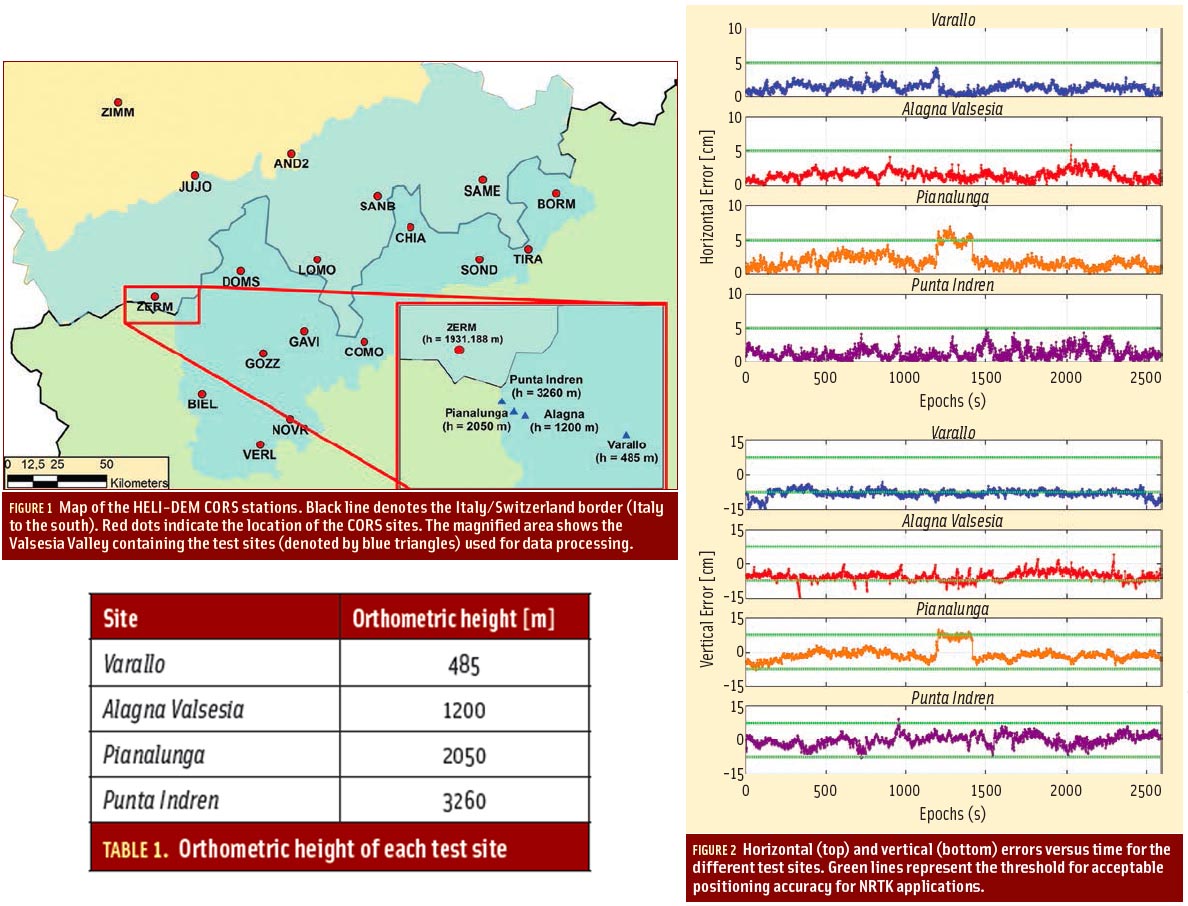
Q: What is the effect of user and CORS height on NRTK performance?

 Dr. Inder Gupta, The Ohio State UniversityChris Bartone, Ohio University
With new signals and frequencies coming on line with modernized GNSSs, antennas play a more crucial role than ever in receiver system design.
Antennas are often an overlooked or undervalued aspect of GNSS user equipment.
By Inside GNSS

Working Papers explore the technical and scientific themes that underpin GNSS programs and applications. This regular column is coordinated by Prof. Dr.-Ing. Günter Hein, head of Europe’s Galileo Operations and Evolution.
By Inside GNSS
The 2014 European Navigation Conference and exhibition will be held at the World Trade Centre (WTC) in downtown Rotterdam, Netherlands on April 15, 16 and 17, 2014. It will focus on positioning navigation and timing (PNT) technology, innovation and business applications. The technical sessions will cover all aspects of PNT developments and applications.
The deadline for abstracts is December 31, 2013
Online registration is open. Early bird registration ends February 15, 2014.
Topics include:
By Inside GNSS Ismael Colomina
SIDEBAR: Ismael Colomina’s Compass Points
Ismael Colomina began his career in 1982. “So, in a way,” he says, “I grew up as a professional at the same time GPS was growing up and maturing. GNSS has always been present in my working life; so, I never experienced the ‘GNSS, aha!’ moment. Rather, I never stopped thinking ‘GNSS, of course!’"
By Inside GNSS
The sixth European Workshop on GNSS Signals and Signal Processing will take place at the University FAF Munich in Germany on December 5 and 6, 2013.
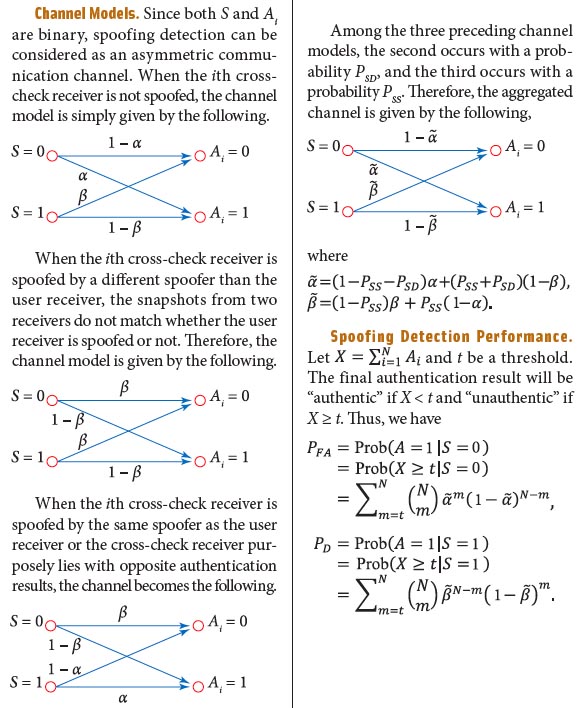 Equations
During the past two decades, the Global Positioning System, together with other GNSSes, has become an essential element of the global information infrastructure, with myriad applications in almost every facets of modern businesses and lifestyles, including communication, energy distribution, finance and insurance, and transportation. Ever-growing dependence on GNSS creates strong incentives to attack civil GNSS, for either an illegitimate advantage or a terrorism purpose.
By Inside GNSS
As engineers painstakingly work their way through tests of the first full operational capability (FOC) Galileo satellite at the European Space Agency’s European Space Research and Technology Center (ESA/ESTEC) in Noordwijk, The Netherlands, European space sources admit that the new generation spacecraft’s maiden voyage will not occur until December 28, if then.
By Inside GNSS
With a key Galileo patent dispute now set to enter its third year the European Union (EU) is moving to monitor GNSS patents around the world — a move that should give it insight into the competitiveness of European positioning, navigation, and technology (PNT) companies and a heads-up about future intellectual property (IP) issues.
By Inside GNSS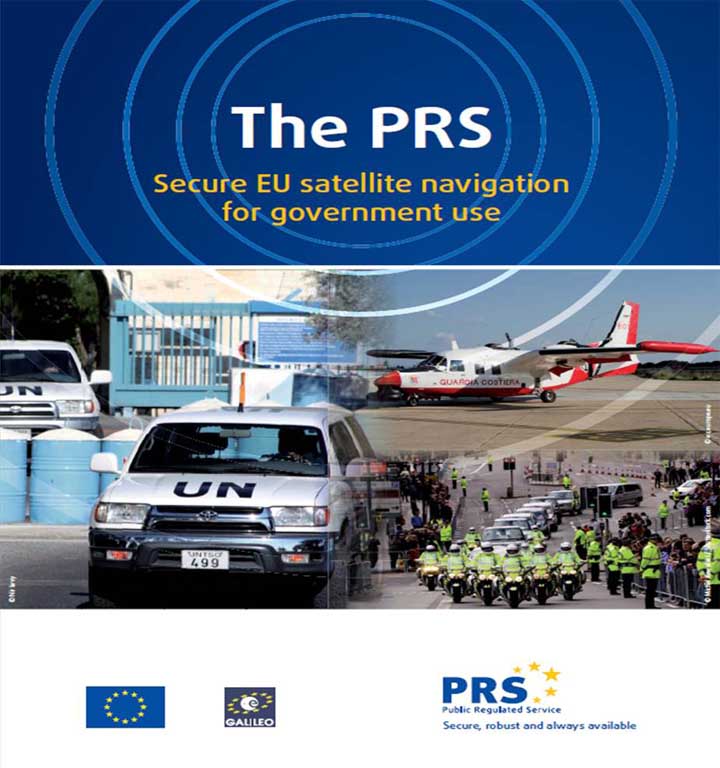
Two British companies, QinetiQ and Nottingham Scientific Ltd (NSL), have partnered to demonstrate an Internet “cloud”-based technology that enables a wide range of high-volume, low-cost satellite navigation applications using Galileo’s Public Regulated Service (PRS).
The NSL-QinetiQ application allows a service provider to host secure navigation on one server in a back office, capture data from multiple locations and units, and subsequently verify the location of a remote user.
By Inside GNSS