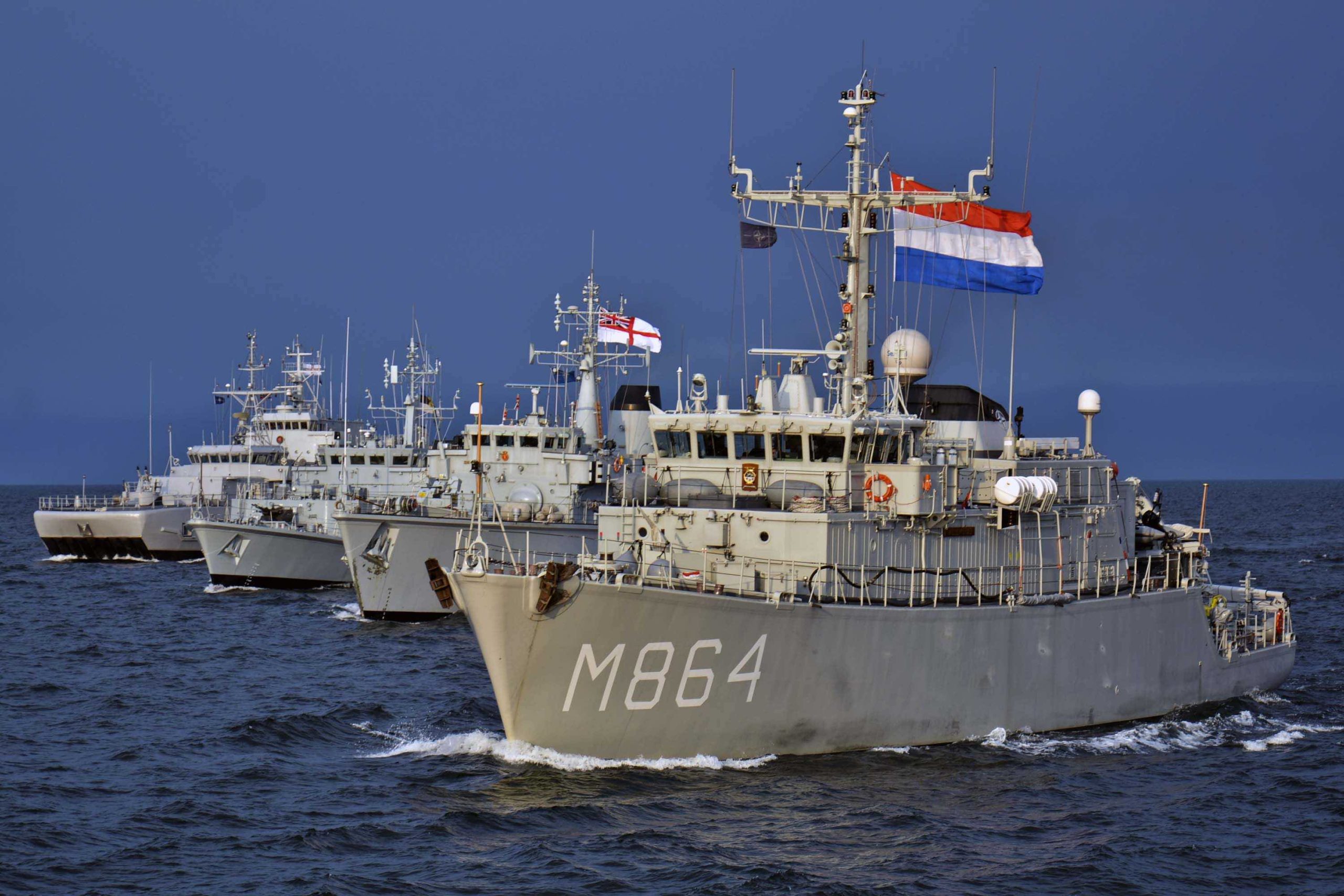
Citing threats to safety, coastal nations of the Baltic and North Seas, along with Iceland, have proclaimed in an open letter they are done tolerating violations of international maritime law and norms.
GNSS Interference as a Trigger
Specifically mentioned is Russia’s regular disruption of GNSS signals in the region and its negative impacts on maritime safety. The letter was posted on government sites the same day as the release of a major report by the United Kingdom’s Royal Institute of Navigation about the adverse effects of GNSS interference on maritime operations.
The declaration seems to indicate a seismic shift in how these nations regard and enforce international maritime codes. Heretofore vessels in “innocent passage” were rarely interfered with, even if there were suspected violations.
The letter and its enforcement also may be a way to finally bring a halt to Russia’s unabashed jamming and spoofing of GPS and other GNSS signals in the region.
The letter opens by citing maritime’s dependence on GNSS, the hazards of it being disrupted, and places the blame for recent disruptions squarely with the Russian Federation.
It then calls on all nations and maritime operators to recognize that interference with GNSS and shipboard AIS systems is a safety and security threat, and to train mariners to operate safely when GNSS is not available.
It also calls for the international community and nations to “Cooperate on the development of alternative terrestrial radionavigation systems which may be used in place of GNSS in the event of disruption, loss of signal or interference.”
Alternative Terrestrial Radionavigation and MaRINav
The Maritime Resilience and Integrity of Navigation (MaRINav) project was sponsored by the European Space Agency and examined several terrestrial and space-based systems. The project’s report published in 2020. Since then, several nations in northern Europe have begun or completed projects to improve one or more aspects of positioning, navigation, and timing. These include terrestrial-based timing systems in Finland, Sweden, Norway, and the United Kingdom (UK), and the UK and France agreeing to establish an eLoran network.
A Manifesto for Stricter Enforcement
The open letter seems to be very much a manifesto and is addressed to all organizations and individuals involved in maritime operations from the U.N.’s International Maritime Organization, to nation-states, shipping companies, and individual seafarers.
After its discussion of protecting GNSS and AIS, the letter goes on to say that all international maritime law and norms must be more strictly adhered to.
“Furthermore…the full and consistent implementation of the International Maritime Organization (IMO) regulations is fundamental to ensuring maritime safety, the smooth functioning of shipping, and the protection of seafarers and the marine environment…”
The increasing use of “shadow fleets” to avoid international sanctions is specifically mentioned.
The signatories say they “require” compliance and use “shall“ and “must” when referring to adherence to specific provisions.
“[We] require that all vessels exercising freedom of navigation strictly comply with applicable international law, whether customary international law or as contracting parties to international conventions…”
Such language seems to indicate a willingness, perhaps even an eagerness to take enforcement action against offenders.
Stateless Vessels and Shadow Fleets
Ten frequently violated provisions of the Safety of Life at Sea Convention and other international maritime agreements are mentioned as concerns. They include precautions to avoid collisions, to ensure vessels have proper documentation, and to prevent pollution.
The first to be mentioned is the requirement that a ship fly the flag of only one nation-state. Ships that fly the flags of two or more states are deemed stateless. A vessel is also deemed stateless if it is flying a nation’s flag, but that nation does not acknowledge it is one of theirs. Any nation can take law enforcement action against stateless vessels much like they would against pirates.
Where Enforcement Might Bite
How and where the signatories will act against violators is not mentioned in the letter. This is the real “meat” of the issue and will determine how much of a sea change this will be. Presumably, they will focus on shadow fleet vessels that can be treated as stateless.
Conceivably they could act against at least some violations anywhere on the globe outside of the territorial waters of another nation.
It is most likely that, at least initially, enforcement will be focused on the Baltic and North Sea. Both of these areas, with the exception of a small portion of the Gulf of Finland near St. Petersburg, Russia, lie within the Exclusive Economic Zones (EEZ) of one of the letter’s signatories. Under the U.N. Convention of the Law of the Sea (UNCLOS), coastal states have the ability to enforce regulations to protect their waters in these zones. An EEZ typically extends 200 nautical miles seaward, or until it meets the EEZ of another nation.
Leverage Over Russian Trade Routes
In addition to making maritime generally safer, the declaration and its follow-on actions could be an effective way to greatly curtail or halt Russian interference with GNSS in the region.
All traffic to Russian ports in Kaliningrad and St. Petersburg must make lengthy transits through the North Sea and Baltic. This commerce, especially through St. Petersburg, is critical as it serves a large segment of Russia’s industry and population. Any slowing or reduction could have significant economic consequences.
The letter was signed by “The Coastal States of the Baltic Sea and the North Sea with Iceland: Belgium, Denmark, Estonia, Finland, France, Germany, Iceland, Latvia, Lithuania, the Netherlands, Norway, Poland, Sweden, and the United Kingdom.”
The open letter is available on numerous government websites such as the German Federal Ministry of Transport.