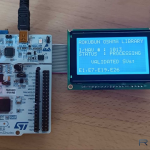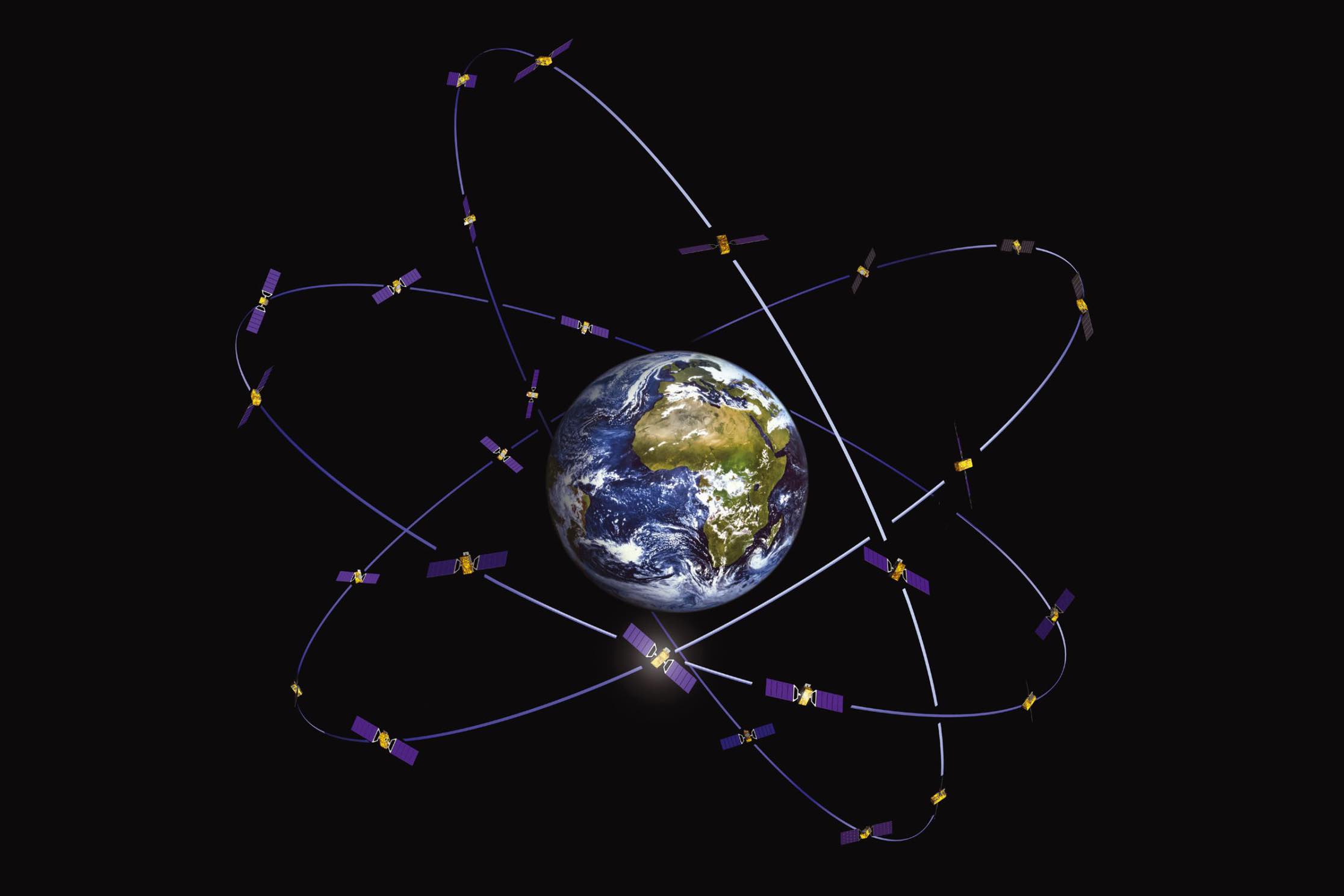
After years of development and large-scale testing, Galileo’s Open Service Navigation Message Authentication (OSNMA) is no longer an experimental signal but a fully declared service, confirming Galileo’s position as the world’s first civilian GNSS to provide cryptographically authenticated navigation data.
Since its Initial Service declaration in July 2025, OSNMA has been broadcasting operational authentication information on Galileo’s E1 signal, supported by a live public key infrastructure and managed cryptographic key chains.
In early 2026, the focus has shifted from technical rollout to operational adoption. The European GNSS Service Centre (GSC) has updated service documentation, key distribution processes and receiver implementation guidance, allowing manufacturers and system operators to integrate OSNMA as part of the Galileo service baseline.
While the cryptographic interface is already defined, program authorities are now aligning regulatory, certification and operational frameworks so that authentication can be used in safety-critical and infrastructure-grade applications.
By embedding digital signatures into Galileo’s navigation message, OSNMA allows receivers to verify that the broadcast ephemeris and clock data truly originate from Galileo satellites and have not been modified. Although it does not prevent jamming, it makes navigation-message spoofing detectable, addressing a long-standing vulnerability in civil GNSS that has become increasingly visible as interference events rise across Europe and its surrounding regions.
The right time
Over the past year, the European Union has strengthened its PNT backbone by securing the continuity of EGNOS into the late 2020s, ensuring that integrity and safety-of-life services remain available while Galileo’s security features mature. Together, EGNOS and OSNMA form complementary layers.
EGNOS provides integrity, accuracy improvements, and real-time safety alerts, while OSNMA verifies authenticity. This combination creates a framework in which aviation, maritime navigation, rail and critical timing users can place greater confidence in satellite-derived position and time.
European Commission and European Union Agency for the Space Program (EUSPA) officials have repeatedly highlighted OSNMA as a pillar of Europe’s space autonomy. In a recent Galileo security webinar, EUSPA Executive Director Rodrigo da Costa said, “With OSNMA, the European Union is reinforcing civil GNSS resilience and innovation.”
Recent operations illustrate why that matters. European satellites, including the Copernicus Sentinel fleet, rely on Galileo timing and orbit data for mission-critical Earth-observation products. The Sentinel-3B GNSS reconfiguration this month underscored how even routine spacecraft operations are now tied to the integrity of those signals, exactly the risk OSNMA is designed to mitigate.
For those interested, EUSPA is sponsoring an ‘OSNMA DAY’ event in Torrejon Spain, in February 2026.