
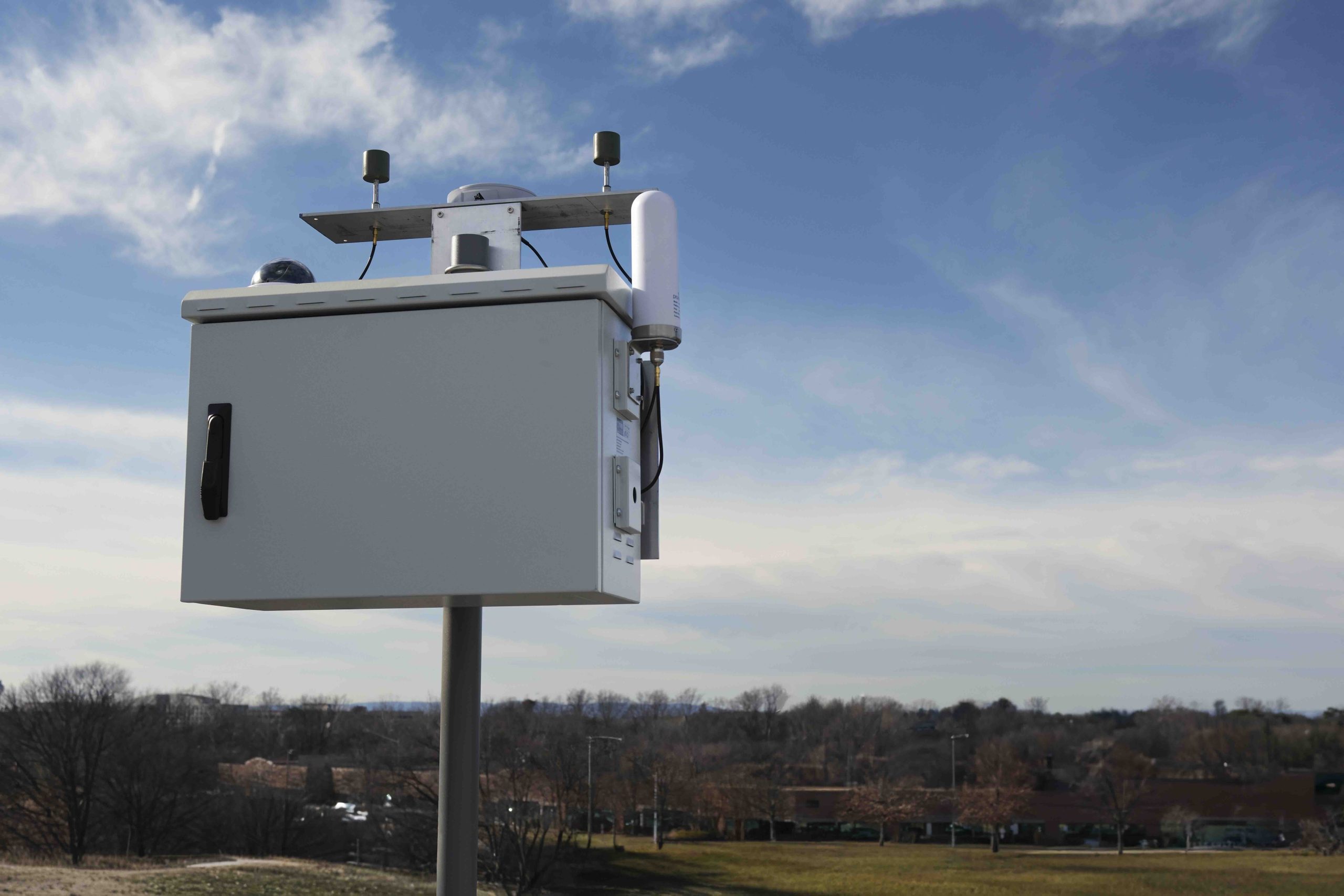
Low Earth Orbit Navigation System (LEONS) milestone advances commercial LEO PNT and reduces satellites’ reliance on legacy GPS signals.
TrustPoint has completed a key ground-to-space time-transfer and tracking demonstration for its Low Earth Orbit Navigation System (LEONS), marking what the company describes as a critical step toward a commercial, GPS-independent positioning, navigation and timing (PNT) service. The work was carried out under the SpaceWERX Alternative PNT (AltPNT) Challenge, according to a January 15 announcement.
From a compact ground node, TrustPoint successfully transmitted LEONS time-transfer and tracking signals to spacecraft in orbit. The demonstration validates a core element of the company’s architecture: providing LEO satellites with precise time and orbit knowledge without depending on GPS or other medium Earth orbit (MEO) GNSS signals.
Addressing LEO’s reliance on GPS for timing and orbit knowledge
Today, most LEO spacecraft derive their own timing and orbit determination from GPS or other GNSS signals, which are increasingly subject to interference and jamming—even above the atmosphere.
TrustPoint’s LEONS concept aims to remove that dependency by providing:
- GPS-independent time transfer from dedicated ground nodes to satellites, and
- Independent orbit tracking, enabling LEO platforms to maintain precise ephemeris and timing even when GNSS is denied or degraded.
Originally conceived to support TrustPoint’s own planned C-band LEO PNT constellation, LEONS is being designed as a service that can also support other LEO operators looking for resilient timing and navigation for their space systems.
The company says the demonstrated ground-to-space capability is intended to form part of a “GPS-independent PNT layer in orbit,” creating a path toward fully independent PNT for users on Earth who need assured service in GNSS-contested environments.
Part of SpaceWERX’s AltPNT push
The demonstration builds on TrustPoint’s earlier success in the SpaceWERX AltPNT Challenge, where the company won two Direct-to-Phase II contracts totaling $3.8 million to mature GPS-independent ground control and PNT security technologies.
The AltPNT effort, run by SpaceWERX in partnership with Space Systems Command, seeks alternate sources of PNT and new ways of integrating them to augment and complement GPS for U.S. and allied users. The aim is to improve resilience and continuity when GNSS signals are jammed or spoofed.
In the new release, TrustPoint characterizes the LEONS milestone as a move from “concepts” to fieldable capabilities, aligning with the AltPNT goal of accelerating operational deployment of alternative PNT options.
Commercial LEO PNT roadmap
Founded in 2020 and headquartered in Herndon, Virginia, TrustPoint is developing a commercial LEO-based GNSS alternative using encrypted C-band signals and a proliferated constellation architecture. The company positions its system as a secure, high-performance PNT service for autonomy, critical infrastructure and defense applications where legacy GNSS may be vulnerable.
TrustPoint has accumulated a series of government contracts around this vision, including:
- Multiple SBIR and STTR awards across U.S. defense agencies,
- The SpaceWERX AltPNT contracts, and
- A NAVAIR SBIR Phase II with Hexagon NovAtel focused on C-band PNT-enabled receivers for the U.S. Navy.
The LEONS demonstration is notable as an example of PNT infrastructure being built first for space users, with the explicit intent to back out to terrestrial and multi-domain users later. If such GPS-independent time-transfer and orbit-tracking services become widely available to LEO operators, they could underpin a new generation of multi-source PNT architectures, where GNSS is one input among several rather than a single point of failure.