
In a time of increasing geopolitical tension and the growing incidence of GNSS interference, particularly in Eastern Europe, quantum sensing has emerged as a pivotal alternative technology for ensuring resilient positioning, navigation and timing (PNT) systems.
Unlike the usual GNSS backup solutions, quantum sensors offer passive, jamming-resistant, and highly accurate complements, making them indispensable for both civilian and military applications.
Conventional GNSS backups, such as inertial navigation systems (INS), rely on internal sensors to estimate position and velocity. However, these systems are prone to drift over time without regular calibration, leading to cumulative errors.
Quantum sensors, on the other hand, exploit quantum mechanical properties to measure physical quantities with unprecedented precision and stability. Quantum magnetometers can detect minute variations in the Earth’s magnetic field, offering the potential for accurate and drift-free navigation data without the need for external signals.
European initiatives
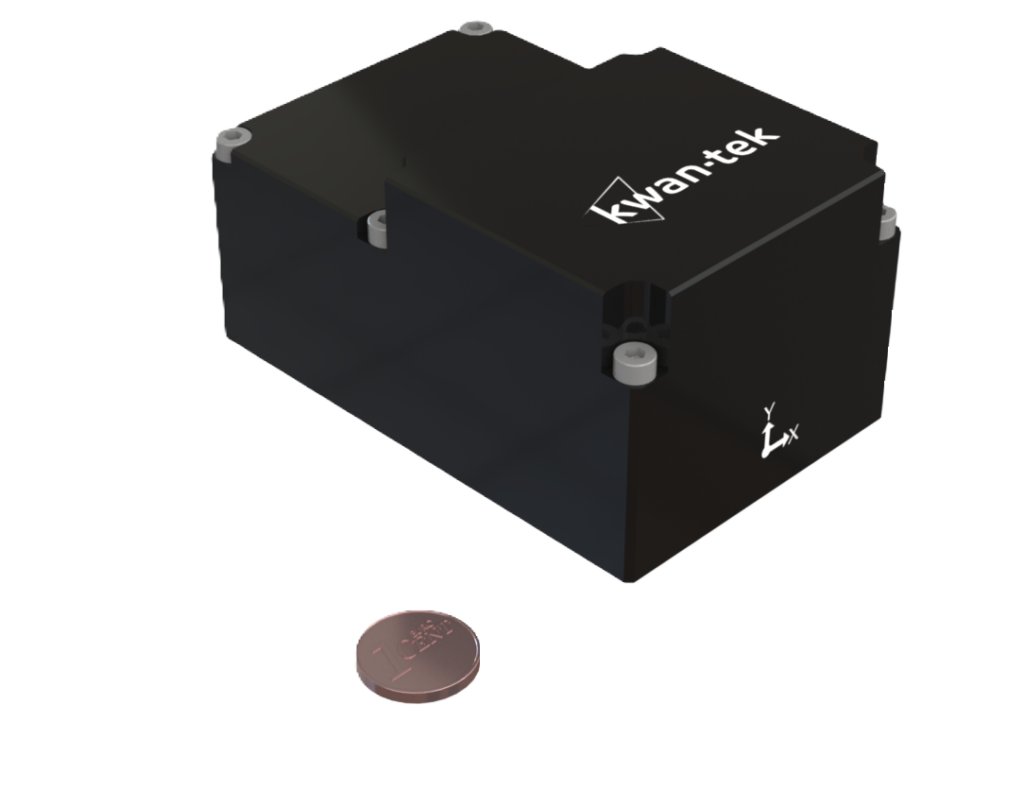
Recognizing the strategic importance of quantum sensing, several European entities are actively pursuing its integration into navigation systems. KWAN-TEK, located in Ploemeur, France, specializes in quantum metrology solutions, focusing on the development and commercialization of diamond-based quantum sensors. These sensors are designed to measure magnetic fields with high precision, which is crucial for alternative navigation systems that do not depend on GNSS.
Infleqtion UK is a British innovator in the development of quantum-enhanced inertial navigation systems (Q-INS). The Q-NAV project, which it leads, focuses on integrating ultra-cold atom technology into inertial navigation systems to provide precise positioning and timing, especially in environments where GNSS satellite signals are compromised, such as in military operations or urban canyons.
Q-CTRL, an Australian company with operations in Europe, has developed a quantum-assured navigation system that has demonstrated superior performance compared to conventional inertial navigation systems (INS). In field trials, their system achieved up to 50 times better accuracy, even in GNSS-denied environments. The company was recently selected for two awards under the U.S. Defense Advanced Research Projects Agency (DARPA)’s Robust Quantum Sensors (RoQS) program.
Recognizing the limitations of traditional GNSS systems, the EU has acknowledged the potential of quantum sensing technologies as a robust alternative. A report published in March 2024 recommended a “system of systems” approach, integrating quantum sensors to provide independent and secure navigation capabilities that are immune to jamming and spoofing.
As Europe continues to confront GNSS vulnerabilities, the integration of quantum sensing into navigation systems represents a forward-thinking approach to ensuring resilience and security.