
European wearable technology is moving into high-performance territory thanks to the Horizon Europe-funded initiative ‘Solution for body kinematics monitoring’.
Coordinated by Genoa-based GTER, the project is being referred to within the consortium as ‘HPC4WEARABLE’.
The collaboration includes Technova, ComfTech, the University of Genoa (Unige), and Sapienza University of Rome.
The project, running through March 2027, carries an EU contribution of €1.36 million. The aim is to fuse high-precision GNSS with wearable sensing in order to provide continuous monitoring of human kinematics and physiology. Use cases span athletic performance, rehabilitation, and remote healthcare.
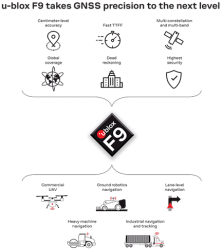
At the heart of HPC4WEARABLE is a prototype designed by GTER and Technova. Mounted under a bicycle saddle, the device features a u-blox ZED-F9R receiver – the advanced multi-constellation GNSS module with integrated IMU dead-reckoning. Also onboard is a Taoglas AGPSF.36C ceramic antenna.
The system enables high-resolution positioning in GNSS-degraded urban or natural environments where multipath and signal loss can cripple conventional satellite-based methods. Integrated IMU maintains trajectory continuity in tunnels and under heavy tree cover, while preserving centimeter-level accuracy.
Wearing it well
The wearable side of the project is led by ComfTech, whose HOWDY vest tracks ECG, heart rate, respiration, stress levels, and related physiological parameters. Combined with GNSS+IMU trajectories, the vest provides a multidimensional picture of athletic effort: not just where a cyclist is in a peloton, but how their body is responding in real time.
According to GTER, this integration allows extraction of fatigue indicators and group dynamics, opening doors to team-level performance insights and individualized training regimes.
Beyond the cycling demonstrator, the new system has clear applications in neurorehabilitation, remote patient monitoring, and occupational safety. The consortium is currently looking at workflow integration with cloud-based high-performance computing (HPC) resources to handle the volume and speed of data.
Sapienza and Unige are contributing algorithmic expertise, particularly in sensor fusion and data interpretation, while academic partners are working to refine models that translate raw GNSS+IMU signals into clinically and athletically meaningful indicators, such as gait asymmetry or stress recovery time.
Early results suggest the system works effectively on the road, in real training environments, under messy multipath conditions. With hardened hardware, careful fusion of GNSS and inertial inputs, and smart textiles, HPC4WEARABLE represents a significant step forward in the convergence of navigation and wearables.