Critical National Infrastructure (CNI) is vulnerable to loss of GNSS for positioning, navigation, and timing (PNT). Low Frequency (LF) systems like eLoran offer a robust alternative, especially where satellite signals are degraded or unavailable. Strong 100 kHz eLoran signals are resilient to space weather and difficult to jam or spoof.
However, high-precision CNI applications require a high level of accuracy, while eLoran accuracy is affected by groundwave propagation delays, influenced by soil conductivity, terrain, and atmospheric conditions.
The UTC Time Distribution (UTD) project, led by Chronos Technology and funded by the European Space Agency, was aimed at assessing the accuracy gap between GNSS and eLoran, supporting the national move toward resilient, UTC (Coordinated Universal Time)-traceable timing via eLoran, aligned with strategic objectives as outlined in the UK Government Blackett Review.
Tony Flavin, Strategic Research Manager, and Calum Dalmeny Technical Director, both of Chronos Technology Limited, delivered the UTD project final presentation, at a special event hosted by ESA.
Is it good enough?
“The vulnerability of GNSS signals is well known,” said Flavin. “We wanted to evaluate the degree of precision to which eLoran can provide precise timing throughout the UK and beyond, over indefinite periods of GNSS outages.”
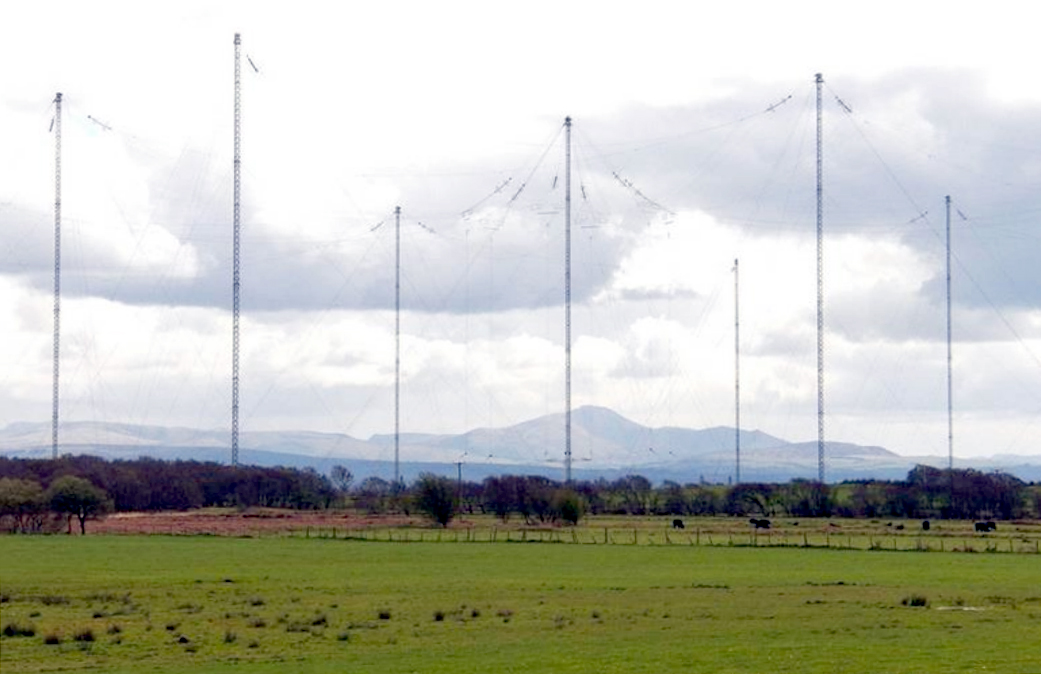
UTD started by replacing failed Microchip 5071A caesium clocks at the eLoran transmitter in Anthorn, UK. It then deployed new eLoran-based ASF (additional secondary factor) measurement systems across the country, and created models to assess measured ASF data.
Receiver trials were undertaken using prototype eLoran receivers from Microchip. These units featured embedded GNSS receivers to measure time of arrival (TOA) data and compute ASF values, delivering UTC-aligned 1 PPS outputs based solely on eLoran signals when operating in timing mode.
The new eLoran receivers produced excellent results, Flavin said, comparable to good quality GNSS timing receivers. The receivers had no noise filtering on the front end, which made them susceptible to 100KHz interference and caused stability issues. Nevertheless, measured ASF data across the UK only changed by +/-100ns over a 12-month period.
Chronos will look to reinforce receiver stability and further improve models including ground saturation data. More testing and analysis of eLoran receivers is set to take place at ESA ESTEC and a number of UK eLoran initiatives are also underway.
The UTD project was funded under ESA NAVISP Element 3, which aims to support Member States’ PNT objectives.