LiDAR-on-chip Uses MEMS Beamsteering
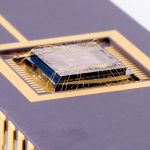
Draper has advanced its development of a LiDAR-on-a-chip using patented, all-digital MEMS optical switches for light beamsteering to gather the digital data to build high-definition maps.
By Inside GNSSDraper has advanced its development of a LiDAR-on-a-chip using patented, all-digital MEMS optical switches for light beamsteering to gather the digital data to build high-definition maps.
By Inside GNSSCalling all automotive engineers — and anyone involved in designing or promulgating the fast-oncoming world of autonomous driving.
For driverless vehicles, current GNSS meter-level positioning accuracy still serves for lane-level detection. But hazardous misleading information poses a serious, disruptive and critical safety concern.
By Inside GNSSAn innovative positioning engine based on a safety-oriented paradigm uses a dual-frequency GNSS receiver, automotive cameras, accurate maps, low-cost inertial sensors and vehicle odometry. The real-time integrity layer bounds the error of each estimated value with a confidence level for safe navigation.
By Inside GNSSThis summer, French railway company SNCF performed successful tests of an autonomous train, using Galileo-enabled receivers. The vehicle ran a distance of four kilometers with the help of remote control. SNCF intends to develop its own prototypes of autonomous freight and passenger trains by 2023.
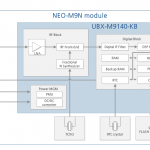
By Inside GNSSu‑blox released the NEO‑M9N, the first module based on the company’s new robust meter‑level M9 global positioning technology platform, designed for demanding automotive, telematics, and UAV applications.
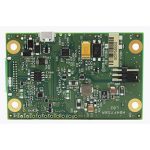
By Inside GNSSTrimble has introduced a compact, high-precision GNSS board designed for unmanned aerial systems (UAS): the Trimble UAS1. The board’s simple connectivity and configuration allow UAS system integrators to easily add satellite-based positioning
By Inside GNSS“The future of navigation is inertial plus . . . some other sensor,” states Michael Braasch at the opening of this month’s webinar. “One sensor suite determines position, velocity and attitude.”
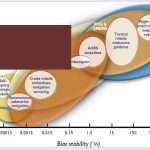
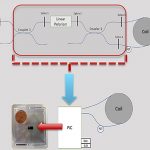
By Inside GNSSThe complex and mission-critical needs of the autonomous vehicle market demand innovation at higher levels in several different sensors and in sensor integration. A new photonic chip technology offers promise in providing high-volume, low-cost manufacture of high-end, tactical-grade performance fiber-optic gyros (FOGs)for inertial navigation in GNSS-obstructed environments.
By Inside GNSSTrimble and Qualcomm Technologies plan to provide sub lane-level accuracy to automotive OEMs, Tier 1 suppliers and other stakeholders considering absolute positioning as part of an autonomy solution.
By Inside GNSSAuto makers, ride-service providers and system integrators all anticipate the day—perhaps sooner than some think—when fully autonomous vehicles take the road. Many rigorous technical navigation challenges must be surmounted to reach that day: safety and reliability come first, before convenience and cost-savings can be realized. Innovative engineers who have solved these challenges share their lessons learned in a free webinar, Wednesday, October 2: “Inertial + SLAM: Creating the Roadmap for Autonomous Vehicles.”
By Inside GNSSGMV has been chosen for development of advanced safe and precise positioning technology for a new generation of autonomous vehicles. Last week the Madrid, Spain-based company announced the award of an important contract for development of a precise satellite-based (GNSS) positioning system with integrity for the new generation of autonomous vehicles of the German carmaker BMW Group.
By Inside GNSSAustralia’s Advanced Navigation, which specializes in a broad range of fields including sensors, GNSS, inertial navigation, RF technologies, acoustics, robotics, AI and algorithms, offers the GNSS Compass, a fully integrated wheelmark certified GPS/INS navigation and heading solution.
By Inside GNSSThe Institute of Navigation’s Cognizant Autonomous Systems for Safety Critical Applications (CASSCA) Conference will feature well-recognized experts and leaders from government, industry and academia. Originally scheduled as part of ION’s International Technical Meeting (ITM) and Precise Time and Time Interval (PTTI) Systems and Applications in late January, CASSCA was postponed at that time due to an extended impasse between U.S. Congressional leaders and the White House that had created a partial U.S. government shutdown.
By Inside GNSS