
The Latvian Positioning System (LatPos) is highlighting how strategic monitoring, operational transparency, and proactive interference management can sustain high-precision GNSS services amid increasing regional signal threats.
The LatPos continuous operating reference station (CORS) network continues to underpin precision positioning across the country, combining a stable station footprint with an explicit free-access policy in force since 2018.
Latvia’s Land, Geology and Cartography Agency (LGIA) describes LatPos as a 27-site base-station system providing real-time RTK correction streams and archived data for post-processing. National reporting through 2025 documents thousands of annual connections and heavy professional uptake.
Technical reporting in Latvia’s national GNSS report and LGIA documentation emphasizes signal-integrity and quality-control measures, including receiver-level interference detection and routine receiver independent exchange format (RINEX) quality-checking workflows.
Strategic moment
Like other Baltic states, Latvia has experienced a significant rise in GNSS interference, with evidence indicating a marked increase in both frequency and severity over recent years. The Latvian Electronic Communications Office reported 820 cases of satellite signal interference in 2024, a substantial increase compared to only 26 cases in 2022, and warned that the affected areas have recently expanded significantly.
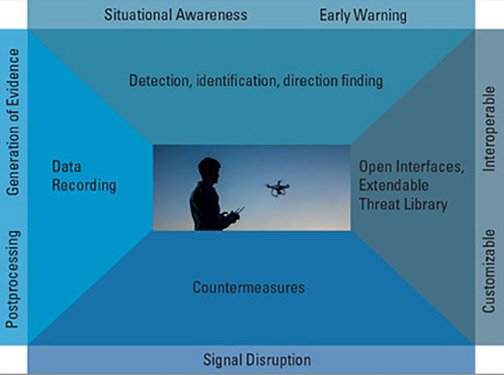
Latvia’s national GNSS report details planned improvements to Radio Technical Commission for Maritime Services (RTCM) and RINEX monitoring, reflecting a pragmatic, operational response to an uptick in reported GNSS signal anomalies across the Baltic region. These monitoring measures aim to identify jamming and spoofing incidents and device-level anomalies quickly, reducing downtime and informing mitigation strategies.
LatPos’s funding and governance model, i.e. government-supported maintenance and open access, lowers barriers to adoption for SMEs, surveyors, municipal engineering teams, and academia. The system’s operational architecture leans on multi-station redundancy, public RINEX archives for post-processing, and published operational guidance to ensure continuity and data quality.
For field practitioners, the outcomes are practical and immediate: reliable RTK corrections for survey campaigns, accessible archived data for high-precision post-processing, and institutional processes to detect and respond to signal-quality threats. In an environment of evolving GNSS interference risks, Latvia’s steady investment in transparent, technically rigorous CORS operations keeps the country well positioned to meet current and near-term precision positioning demands.
For Europe and the wider GNSS community, LatPos demonstrates practical strategies for detecting, monitoring, and mitigating jamming and spoofing, offering lessons applicable to CORS networks worldwide facing increasing interference threats.