Poland has emerged as one of the most active European states confronting real-world GNSS (Global Navigation Satellite System) interference.
Over the past two years Polish researchers, government labs and commercial teams have moved from descriptive studies to operational pilots, deploying sensors, building monitoring networks and developing mitigation tools that protect aviation, maritime operations and critical infrastructure.
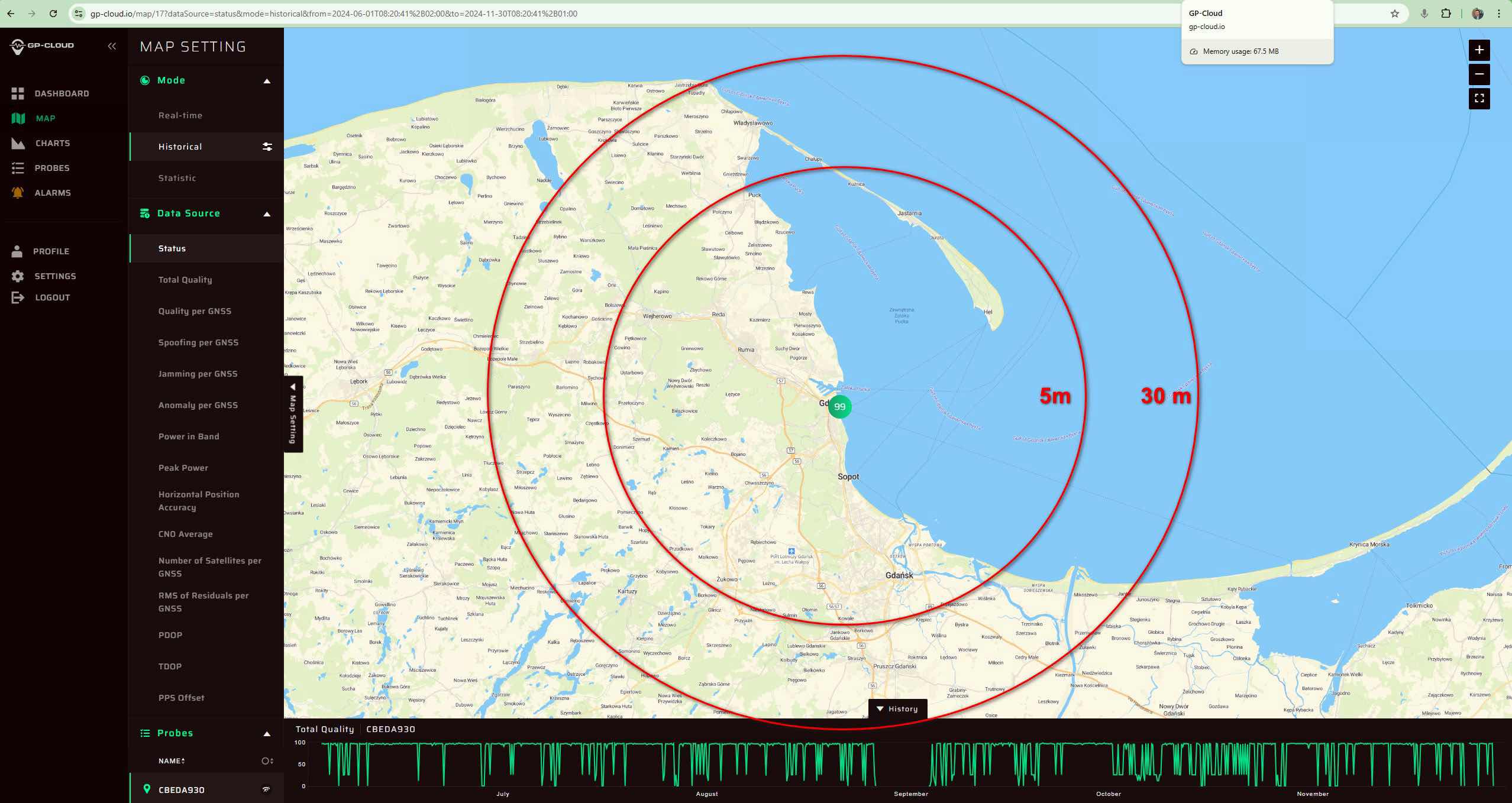
A prime example is the industry/academic collaboration between GPSPATRON, a Polish engineering company, and Gdynia Maritime University. Together they have run ground-level monitoring campaigns in the Gulf of Gdansk and along the Polish coast, documenting repeated jamming episodes and producing datasets intended for forensic analysis, detection-algorithm development and event attribution. That joint work has produced published reports and a public white paper that improve regional understanding of Baltic GNSS interference.
Commercial detection and early-warning capabilities are bread and butter for GPSPATRON. The company markets compact GP-Probe detectors and a cloud analytics service (GP-Cloud) designed to detect, classify and time-stamp jamming and spoofing events in real time. The tools are aimed at protecting critical events, power-grid timing infrastructure and unmanned systems, and have been used in demonstrator deployments and event protection use cases.
Widening scope
At the state level, Poland’s National Institute of Telecommunications (NIT) is leading a pilot study backed by the European Space Agency(ESA) to build a real-time GNSS signal monitoring system in Poland (RTGMS). The system is intended to alert users of abnormal signal behavior and to help in the making of operational decisions when GNSS is degraded. The RTGMS project will integrate distributed monitoring stations and deliver actionable status information to civil and defense stakeholders.
Meanwhile, university teams and maritime institutes in Poland have quantified the operational impacts of interference, including measured position errors and durations of disruption, informing a variety of national situational awareness and policy discussions. This research has allowed Polish officials to link some Baltic GNSS disruptions to activities originating near Kaliningrad.
Poland’s proactive stance on GNSS jamming and spoofing makes the country a key regional actor within both the Baltic and EU security landscape. Collaboration between Polish academia, industry, and government mirrors broader EU efforts to enhance technological sovereignty and protect critical infrastructure. Through initiatives like RTGMS and partnerships with ESA, Poland contributes to the EU’s wider objectives of resilient navigation, cyber defense, and situational awareness, strengthening regional stability and complementing collective European responses to emerging hybrid threats.