The 746 Test Squadron’s DI testing, with its end-to-end traceability, offers a rapid, cost-effective and low-risk alternative to traditional testing methods.
CARLOS RUIZ, ORLANDO PADILLA, PAUL STEWART, 746TH TEST SQUADRON
The 746th Test Squadron (746 TS), a unit of the 704th Test Group, Arnold Engineering Development Complex, is the U.S. Department of Defense’s premier organization. Located at Holloman Air Force Base, New Mexico, the 746 TS conducts high-fidelity developmental and operational testing for air, space and ground platforms across the joint services. Its core mission is to plan, execute and analyze navigation system performance in both benign and contested environments, ensuring U.S. and allied forces retain operational advantage in the electromagnetic spectrum.
The squadron specializes in evaluating GPS, inertial navigation systems (INS), and embedded GPS/INS solutions through a combination of simulation-based testing, hardware-in-the-loop environments, and open-air testing. These efforts support a broad range of programs—from prototype systems to fully fielded platforms—by providing critical performance data that informs acquisition decisions, operational deployment, and survivability assessments.
A key capability of the 746 TS is Direct Injection (DI) testing. DI enables the injection of simulated Global Navigation Satellite System (GNSS) signals—representing satellite constellations, RF interference, spoofing, or other contested signal conditions—directly into a platform’s GNSS receiver via its antenna port. Because these signals are never radiated into open air, DI testing does not require a Radio Frequency Authorization (RFA), significantly streamlining the test process.
This method offers numerous benefits, including rapid setup, repeatable scenarios, and precise control over signal environments. DI is especially valuable during platform integration, as the simulated PNT signal can be traced throughout the system—from injection at the antenna port through subsystems that use PNT signals and information. This end-to-end traceability enables engineers to verify system performance and signal integrity across the full platform architecture.
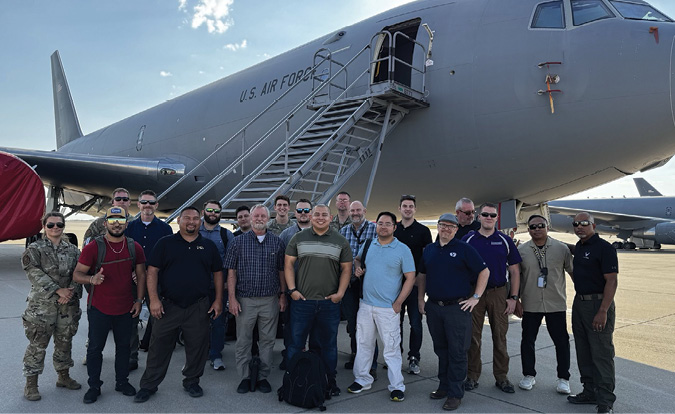
While the 746 TS hosts its Navigation Test and Evaluation Laboratory (NavTEL) and other classified facilities suitable for DI testing, transporting operational platforms to Holloman is often impractical due to size, classification or mission commitments. To overcome this, the squadron has developed a mobile simulation capability, allowing DI systems to be deployed to various remote locations such as System Integration Laboratories (SILs), hangars or operational flightlines. This mobility ensures high-fidelity navigation testing can occur without disrupting platform availability or compromising security, enabling critical evaluations to proceed on schedule and on site.
This article provides a detailed overview of DI testing methodology, its role in supporting both developmental and cybersecurity testing, and case studies illustrating the effectiveness of DI in recent 746 TS efforts, including platform support for the MH-139 helicopter and the KC-46 Pegasus.
Challenges of Open-Air GNSS Denied Testing
Conducting open-air testing in GNSS-denied or contested environments is inherently complex, resource-intensive, and highly regulated. These tests typically involve the intentional broadcast of L-band radio frequency (RF) interference, including jamming or spoofing signals, to evaluate how navigation systems perform under degraded or deceptive conditions. However, because of the potential risks to civilian and military systems, such testing is subject to strict regulatory oversight.
Before any RF energy can be radiated into the environment, test organizations must obtain a formal authorization from governing bodies such as the Federal Aviation Administration (FAA) and U.S. Strategic Command (USSTRATCOM). This process requires the development and submission of a detailed RF “laydown” model, which simulates signal propagation characteristics and defines the anticipated impact area. The purpose of this model is to assure regulatory authorities the test will not interfere with:
• Civilian air traffic navigation or communication systems
• Military and national security communications
• Other critical RF-dependent infrastructure
Preparing an RFA package is a lengthy and resource-intensive effort, typically requiring a minimum of three months of dedicated work—even more if the laydown is particularly complex. This preparation includes:
• Extensive spectrum analysis to assess frequency deconfliction and interference risk.
• Interagency coordination between federal, military and local stakeholders.
• Physical site surveys to evaluate terrain, line-of-sight, and environmental variables.
• Detailed documentation to support all technical, safety and regulatory considerations.
Even with approval, location-specific constraints can significantly limit test execution. For instance, test ranges near Air Traffic Control (ATC) centers or major commercial flight corridors often impose strict RF power limitations or complete transmission prohibitions. These restrictions are designed to uphold safety of flight and safety of life, not only for military aircraft and crews, but also for civilian aviation, nearby installations, and the general public.
Additionally, access to high-demand test ranges is often constrained by competing scheduling priorities, including concurrent military training exercises, developmental testing, and joint operational activities. This competition for limited range time poses significant scheduling risks, potentially delaying critical test events or forcing deconfliction with other mission priorities.
Testing against sophisticated or classified threats introduces further complications. These scenarios may require the real-time presence of trained operators to control and monitor the emission of threat signals. Such hands-on support increases the manpower, travel costs and coordination burden—often stretching resources thin.
Finally, even when all approvals and resources are in place, operational limitations may reduce test realism. Aircraft may be forced to fly restricted or non-representative profiles to stay within approved boundaries, which can constrain the fidelity and applicability of the resulting data. This limitation poses a challenge for replicating the true dynamics and operational complexity of GNSS-contested combat scenarios.
Given these factors, open-air GNSS-denied testing remains a critical but constrained tool—one that often must be reserved for final validation or test events where radiated emissions are indispensable. These constraints underscore the value of alternative approaches, such as DI testing, which can achieve many of the same objectives with greater flexibility, lower risk and faster timelines.
Advantages of Direct Injection Testing
DI testing enables the simulation of contested GNSS environments without radiating signals into open air, offering a low-risk, cost-effective, and operationally flexible solution that supports a wide range of test objectives.
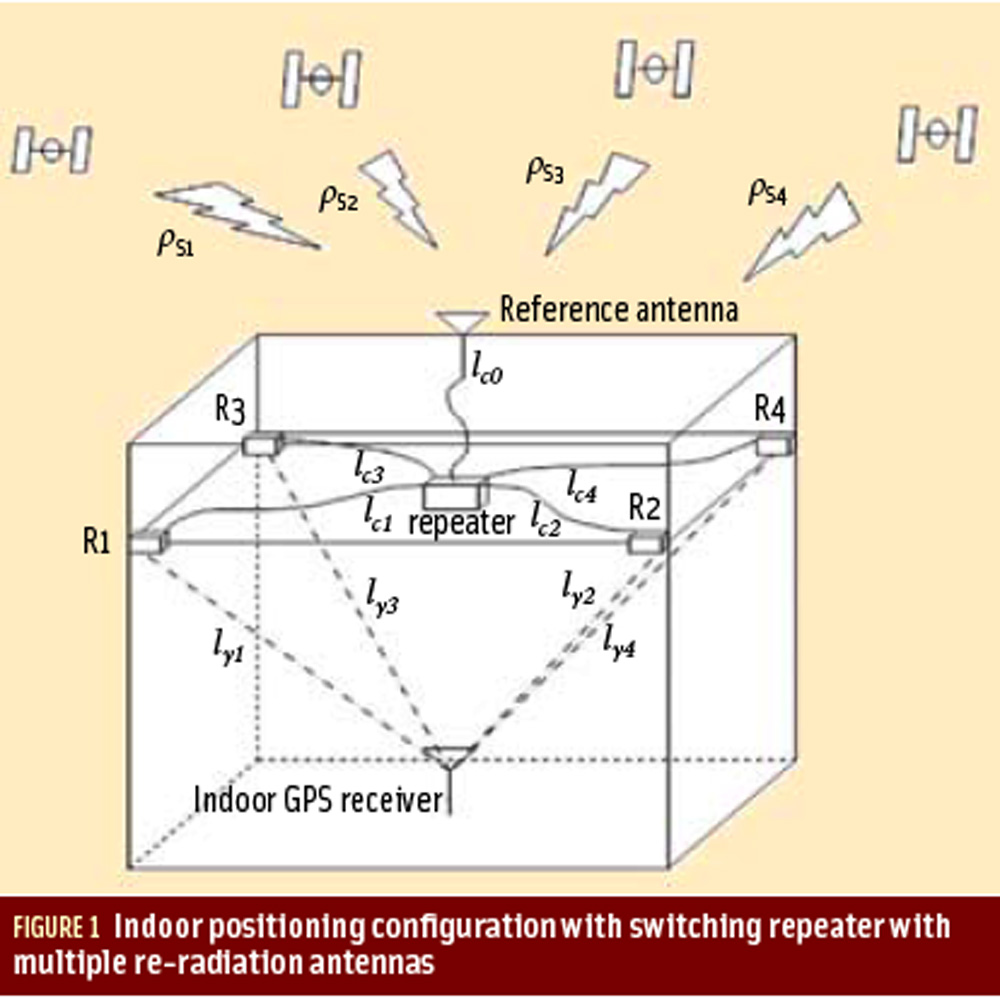
At its core, DI testing uses GNSS signal simulators to generate a composite RF environment—including satellite constellations, signal degradation, spoofing and jamming—and injects that signal directly into the platform’s GNSS receiver at the antenna port. This is done either by radiating through a small anechoic hood inline with the antenna or by bypassing the antenna entirely. Because no electromagnetic energy is broadcast externally, DI testing is exempt from RFA requirements, avoiding the lengthy approval process typical of open-air testing.
KEY BENEFITS OF DI TESTING INCLUDE:
Expedited Test Timelines: Without the need for RFA and with minimal range scheduling constraints, DI tests can be planned and executed in weeks rather than months.
Repeatability and Control: Test conditions—such as satellite geometry, interference sources, timing profiles, and dynamic motion—can be precisely configured and replicated across runs, allowing detailed scenario comparison and analysis.
Reduced Operational Risk: By avoiding signal transmission into the environment, DI prevents unintended interference with civilian or military systems. It also enables the introduction of sensitive or prohibited threat signals that cannot be broadcast openly.
Lower Cost: DI testing requires smaller teams, less infrastructure, and minimal travel or support equipment, resulting in lower overall costs compared to open-air or live-flight testing.
One of the most important applications of DI is during platform integration. Injecting a simulated PNT signal at the antenna port allows engineers to trace the signal through every stage of the platform’s architecture—from RF processing to final system output. This ensures accurate validation of PNT data across a wide range of subsystems, including:
• Cockpit displays and avionics
• Navigation and mission computers
• Flight control systems
• Weapons management and guidance systems
This end-to-end traceability verifies not only the navigation solution’s accuracy but also its correct interpretation, distribution and application throughout the platform. This is especially critical for advanced systems with tightly integrated navigation, targeting and mission execution components.
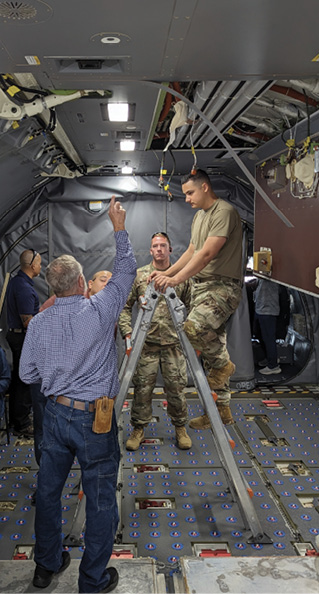
Although DI testing is most often performed at Holloman AFB within the 746 TS’s NavTEL or other classified facilities, many platforms cannot be relocated due to size, security, mission commitments, or configuration. To accommodate this, the 746 TS maintains a fully deployable DI test capability, allowing simulation assets to be brought directly to the platform’s location, including:
• System Integration Laboratories (SILs)
• Aircraft maintenance hangars
• Operational flightlines or mission prep areas
This mobile test architecture permits simulation-based testing with minimal disruption to platform availability, maintenance or operational security. It enables tailored test campaign design, optimizing scenario content, sequencing, and real-time data capture in alignment with user objectives and readiness milestones.

Cybersecurity and NDAA Compliance
In response to the 2024 National Defense Authorization Act (NDAA) Section 1686, which mandates comprehensive PNT vulnerability assessments for all major DoD weapon systems, the 746 TS has played a pivotal role in advancing PNT cybersecurity test and evaluation (T&E) capabilities. This legislation requires the rapid identification, quantification and mitigation of cyber risks to ensure critical military platforms maintain operational integrity in contested and adversarial digital environments.
Although the 746 TS is well-known in the PNT community for its expertise in conducting open-air L-band navigation warfare (NAVWAR) testing in support of DoD Developmental Test & Evaluation (DT&E) programs, traditional open-air testing methods and timelines often fall short of the accelerated schedules and strict requirements imposed by the NDAA. To address these challenges, the 746 TS leverages its expertise in simulation-based testing and DI techniques to create an expedited DT&E process focused on enhancing cyber resiliency in the PNT domain.
By using DI and controlled laboratory environments, the 746 TS is able to simulate realistic cyber-physical scenarios that combine GPS/GNSS signal integrity with cybersecurity threat vectors. This approach enables early detection of system vulnerabilities.
In the last several years, the 746 TS’s rapid PNT cybersecurity DT&E framework supported the evaluation of more than 50 platforms, spanning air, ground and space domains, providing decision makers with actionable risk assessments and prioritized remediation strategies. This capability significantly shortened the cyber testing cycle, allowing for accelerated incorporation of security improvements without delaying broader acquisition or deployment schedules.
The squadron’s integrated PNT cyber support extends beyond vulnerability identification. It includes collaboration with program offices, developers and future operational users to define comprehensive test requirements that weave L-band cybersecurity considerations into every phase of platform development. This holistic approach ensures cyber resilience is not an afterthought but a core attribute of system performance and survivability.
Through these efforts, the 746 TS has become a key enabler in meeting NDAA mandates and in the early detection of platform integration PNT vulnerabilities, strengthening the DoD’s commitment to maintaining technological superiority against evolving L-band cyber threats. Their pioneering use of DI and simulation-based PNT cybersecurity testing continues to shape best practices across the DoD test community, setting new standards for rapid, realistic and rigorous cyber risk evaluation.
Integrated Cyber Support for MH-139 Testing
The 746 TS has demonstrated exceptional expertise in providing integrated cyber and navigation test support during developmental testing of the MH-139 helicopter. This program represents a critical upgrade to the U.S. Air Force’s fleet, demanding rigorous evaluation of not only traditional navigation performance but also the platform’s cyber resiliency and data integrity under operational conditions.
Collaborating closely with Air Force Operational Test and Evaluation Center (AFOTEC) Detachment 5 (Det 5), 48 Cyberspace Test Squadron (CTS) Detachment 1 (Det 1), MH-139 program offices, system developers, and future operational users, the 746 TS played a key role in defining and refining both developmental and operational test requirements that encompass navigation system accuracy, robustness against electronic threats, and cyber vulnerability mitigation. This comprehensive engagement ensured cyber considerations were thoroughly embedded throughout the entire test lifecycle—from initial concept validation to final system certification.
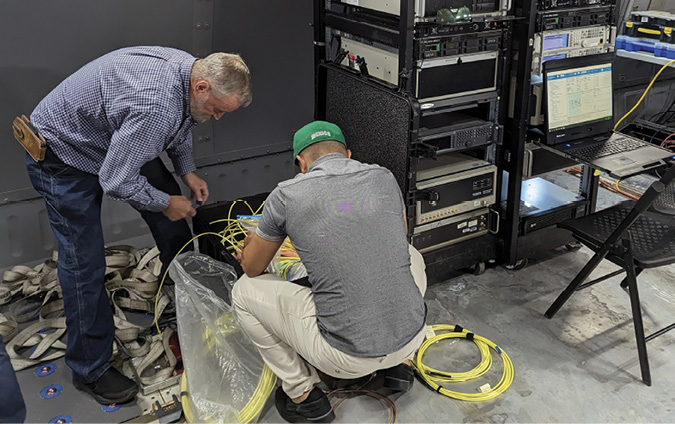
A notable challenge encountered during MH-139 testing involved integrating the TIDAS ruggedized data acquisition system, a state-of-the-art platform essential for capturing high-fidelity telemetry, sensor outputs, and performance metrics. The TIDAS system was critical for ensuring test data was complete and accurate, but its novel architecture introduced complex connectivity issues that threatened to disrupt data collection.
The 746 TS’s test engineers rapidly diagnosed and resolved these integration challenges through innovative troubleshooting techniques and real-time collaboration with flight crews and system engineers. Their swift interventions enabled continuous, reliable data capture throughout flight operations, safeguarding the integrity of the mission-critical telemetry essential for performance assessment.
Beyond technical problem solving, the squadron’s detailed analysis of the collected data provided valuable insights into the MH-139’s GPS tracking behaviors, navigation signal stability, and susceptibility to contested environments. These findings directly informed key operational decisions, enhancing confidence in the platform’s navigation reliability and cyber resilience across diverse flight profiles and mission scenarios.
The integrated cyber test support for the MH-139 underscores the 746 TS’s commitment to delivering comprehensive, multi-disciplinary evaluations that ensure new platforms meet the increasingly complex demands of modern warfare, particularly within contested electromagnetic and cyber domains.
Innovative Test Execution: KC-46 Multi-Simulator Approach
The 746 TS pioneered a multi-simulator testing methodology to address unique operational challenges encountered during GNSS signal simulation for the KC-46 Pegasus tanker aircraft. This approach was developed to overcome limitations inherent in single-simulator setups, which affected test efficiency and data fidelity.
In initial test campaigns using a single GNSS simulator, a mandatory stationary initialization period of approximately 15 minutes was required. During this phase, the system under test (SUT) needed to acquire and lock onto a valid GPS solution, establishing a baseline “ground truth” prior to the introduction of Complex Emerging Threat (CET) NAVWAR signals. If the SUT failed to achieve a reliable GPS fix within this window, test scenarios would have to be aborted and restarted. These delays would impact test schedules, increase costs, and introduce risks to meeting critical program milestones.
To mitigate these challenges, the 746 TS developed a dual-simulator architecture synchronized by a precision time sync server. This system used two GNSS simulators working in tandem:
• The first simulator continuously provided a stable, uncontested “ground truth” GNSS signal, enabling the SUT to reliably initialize and maintain baseline GPS lock.
• The second simulator was programmed to activate only at a precise, pre-determined moment via a synchronized time pulse. At this trigger, the second simulator would begin transmitting the contested CET environment, while the first simulator simultaneously ceased transmission.
This seamless transition between simulators allowed for real-time switching from uncontested to contested GNSS signals without interrupting the SUT’s operation. The approach significantly improved test reliability by ensuring the platform was always ready for each scenario and eliminated the need for repeated initialization attempts.
The multi-simulator method also enhanced test data fidelity by providing controlled, repeatable conditions and precise timing control. This capability reduced schedule risk and test costs while enabling more comprehensive evaluation of the KC-46’s navigation system resilience in complex contested electromagnetic environments.
Through this test execution strategy, the 746 TS demonstrated its ability to adapt and optimize testing methodologies, supporting mission-critical platforms with advanced, high-
fidelity PNT evaluation techniques that align with evolving operational requirements.
Conclusion
The 746 TS’s DI GNSS testing capability represents a vital advancement in the evaluation of PNT systems across a wide spectrum of military platforms. By enabling high-fidelity simulation of complex satellite signal environments—including contested and denied conditions—without the need for open-air RF transmissions or costly RFAs, DI testing offers a rapid, cost-effective, and low-risk alternative to traditional testing methods.
The squadron’s ability to inject simulated signals directly into platform antenna ports provides unparalleled traceability and control, facilitating comprehensive verification of navigation system performance from signal acquisition through to integration within mission-critical subsystems. Moreover, the 746 TS’s mobile simulation assets extend this capability beyond the laboratory, allowing for in-situ testing that accommodates logistical, security and operational constraints of diverse platforms.
Complementing its DI expertise, the 746 TS plays a pivotal role in integrated PNT cybersecurity testing, supporting compliance with directives such as NDAA Section 1686 and ensuring the L-band cyber resilience of major weapon systems. Through collaborative efforts with program offices and operational stakeholders, the squadron effectively bridges navigation, cyber and electronic warfare domains to deliver robust, mission-ready solutions.
Innovative approaches, such as the multi-simulator architecture employed for the KC-46 Pegasus, exemplify the squadron’s commitment to overcoming technical challenges and optimizing test efficiency. Case studies, including support for the MH-139 helicopter, highlight the 746 TS’s unique ability to troubleshoot complex system integrations and deliver critical data insights that directly inform certification and operational decisions.
As the electromagnetic battlespace grows increasingly contested and complex, the 746 TS remains at the forefront of PNT test and evaluation, ensuring U.S. and allied forces maintain a decisive advantage through cutting-edge technology assessment, rapid adaptation, and unwavering technical excellence.
Authors
Carlos A. Ruiz is the Functional Area Team Lead for Simulation and Modernized GNSS at the 746 TS, where his primary duties are to oversee processes and technical capabilities, along with training and mentoring the 746 TS workforce in his functional area. He graduated from the University of Texas at El Paso with a Bachelor of Science in Electrical Engineering. His prior experience includes development of NAVWAR systems, PNT test automation and GPS enterprise data analysis.
Orlando Padilla is the Functional Area Team Lead for Test Excellence at the 746 TS, where his primary duties are to ensure a thorough and disciplined approach to testing guidance and PNT systems. He graduated from New Mexico State University with a Bachelor of Science in Engineering Technology and a minor in Manufacturing. His prior experience as a 746 TS test manager includes leading various tests for integrated threat simulation, open air NAVWAR, inertial navigation, and GPS enterprise testing.
Paul R. Stewart is the Enterprise Test Management Element Chief at the 746th Test Squadron, where he directs GPS Enterprise test management initiatives. A former U.S. Air Force Integrated Communication, Navigation and Mission Systems technician and instructor, he holds a B.S. in Aerospace Engineering with a minor in Mechanical Engineering from New Mexico State University. His prior work as a 746 TS Test Manager included leading critical tests in integrated threat simulation, inertial navigation, and GPS Enterprise systems.