British officials and French President Macron have announced collaborative efforts on a range of advanced technologies that includes resilient positioning, navigation and timing (PNT) such as eLoran.
The announcement on resilient PNT to protect infrastructure was made during the French President’s visit to Imperial College, London. The event was part of the first state visit of a European leader since Brexit.
DR Peter Kyle, the UK’s Secretary of State for Science, Innovation and Technology, said “…we are building resilient and innovative positioning, navigation and timing systems to contribute toward European collective security.”
The partnership between the two nations also includes work on AI super computing infrastructure and AI research.
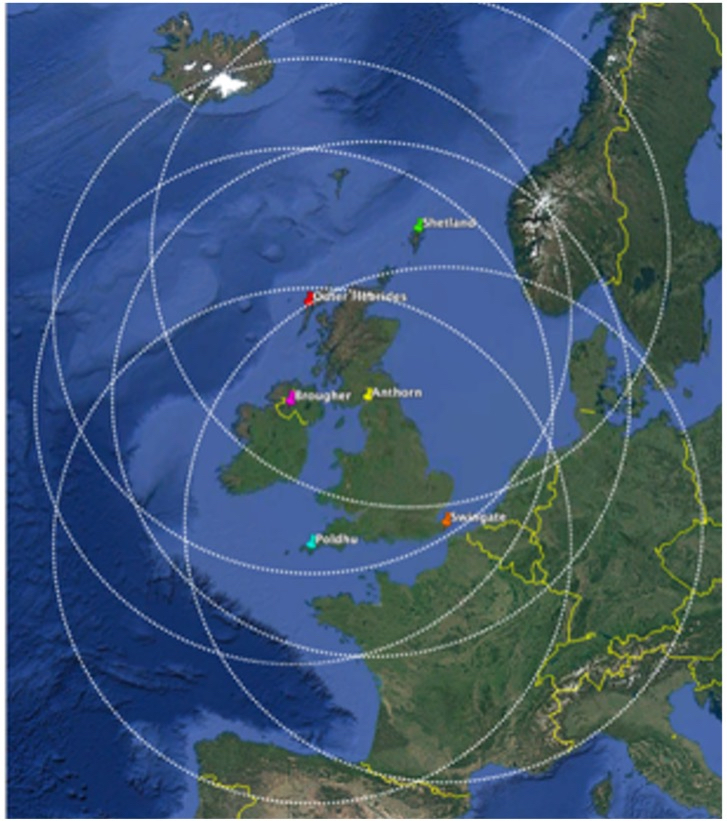
The UK had previously established a project to expand its eLoran capability from a single site providing a timing signal to six that will provide high power, low frequency PNT for the British Isles and their maritime regions. One or more timing signals from this network will also reach and be usable across much of northern and western Europe. With minimal investment, France and other European nations will be able to take advantage of those signals and, if desired, improve local service to a full PNT service with their own primary and/or differential transmitter sites.
According to a British government press release:
“UK and French experts will work more closely to increase the resilience of both countries’ critical infrastructure to the signal-jamming seen in the war in Ukraine, as part of a suite of joint science and tech work being announced today (Thursday 10 July).
From our electricity infrastructure, to transport, to financial transactions, the tech we rely on for everyday life depends on reliable Positioning, Navigation and Timing (PNT), often provided via satellites. The conflict in Ukraine has shown how new technologies—in some cases, just small hand-held devices—can be used to disrupt PNT services, potentially causing major disruption to the vast areas of life and the economy reliant on them.”
After Brexit, the United Kingdom was excluded from the Galileo project, much to the chagrin of many in Britain and Europe. Providing eLoran timing signals to Europe, especially in the face of chronic GNSS interference experienced in the Baltic and elsewhere, is seen by many as a technical and diplomatic triumphal comeback for the nation.
This partnership is also seen by many as a noteworthy leadership move for France. While the EU has expressed concern for years about interference with GNSS, France is leading the continent in proactively addressing the issues. That it has taken the initiative for post-Brexit rapprochement with the UK adds to its status as a leader on the continent.